Chasing Altitude, Avoiding the Mirror: What Relocation Cannot Resolve About Anxiety
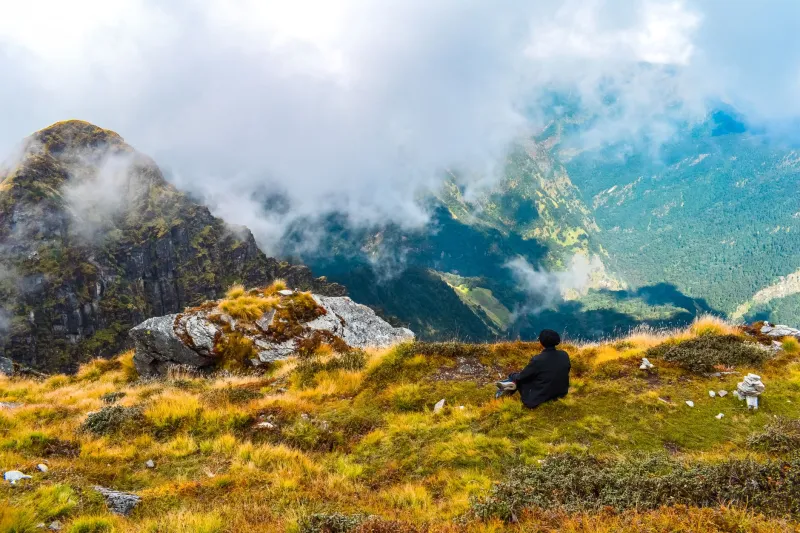
There is something undeniably compelling about the idea of beginning again in a place as vast and uncompromising as Alaska. The imagery alone carries weight: glaciers that dwarf human concerns, skies that shift from violet to gold without warning, communities where people are measured by their resilience rather than their résumés. For someone living beneath the persistent pressure of anxiety, that image can feel less like a destination and more like a remedy.
It is not a remedy. And understanding why—without dismissing the genuine value Alaska can offer—is one of the more important distinctions a person can make before, during, or after any significant life transition.
The Seduction of the Clean Slate
Anxiety is an exhausting companion. It narrates worst-case outcomes, disrupts sleep, strains relationships, and has a particular talent for making familiar environments feel claustrophobic. It is entirely natural, then, that the mind begins to associate relief with elsewhere. If the current setting is where anxiety lives, the logic goes, then a sufficiently different setting must be where it dies.
This reasoning is emotionally coherent and clinically inaccurate.
Anxiety is not housed in an apartment, a city, or a social circle. It is housed in the nervous system, shaped by temperament, reinforced by learned patterns of thought, and often anchored to experiences that predate any current address. A person who boards a flight to Anchorage carrying a chronic fear of failure, an avoidant attachment pattern, or unprocessed grief will find those things waiting at baggage claim.
This is not pessimism. It is the foundational premise of meaningful change: you must work with what you carry, not simply outrun it.
What Alaska Actually Offers
None of the above is meant to diminish what is genuinely therapeutic about life in Alaska. The evidence for nature's effect on mental health is substantial. Time spent in natural environments has been associated with reduced cortisol levels, lower rumination, and improved mood regulation. The slower pace of many Alaskan communities, the enforced simplicity of remote living, and the culture of practical interdependence can all create conditions that support psychological growth.
More specifically, Alaska has a way of stripping away distraction. When the nearest grocery store is a forty-minute drive and the winter darkness arrives by mid-afternoon, the psychological noise of modern consumer life tends to quiet. In that quiet, things become visible. Some of those things are beautiful. Others have been carefully avoided for years.
This is precisely why Alaska can be such a powerful context for healing—provided the healing is actually being pursued, rather than evaded.
Escapism Versus Intentional Transition
The clinical distinction worth examining here is the difference between escapism and intentional life change. Both can involve moving across the country. Both can involve leaving behind relationships, careers, or communities. The difference lies in the internal orientation of the person making the move.
Escapism is characterized by the belief that the problem is external. The goal is to get away from something: a painful relationship, a suffocating environment, a version of oneself that feels unbearable. The move is reactive, and the relief it offers is typically temporary. Once the novelty fades—and in Alaska, the novelty does eventually fade, often replaced by genuine logistical and psychological challenges—the original anxiety reasserts itself, sometimes with additional force.
Intentional transition, by contrast, is characterized by the belief that change is possible and that a new environment can support, but not substitute for, that change. The person making this kind of move has done some honest accounting. They have asked themselves difficult questions. They have, ideally, begun working with a therapist or counselor before the moving truck arrives.
The distinction is not always clean, and most people operate somewhere between these poles. The value of examining where you fall on that spectrum is not to judge the desire to relocate, but to ensure that the move serves your actual wellbeing rather than your avoidance.
A Framework for Honest Self-Assessment
Before attributing too much transformative power to a change of scenery, consider the following questions with genuine care:
What am I moving toward, and what am I moving away from? Both can be valid. A person drawn to Alaska's outdoor culture, slower pace, or sense of community is moving toward something concrete. A person who primarily wants to escape a social environment or a version of themselves is moving away from something—and that something will require direct engagement regardless of latitude.
Would I still want to make this move if my anxiety were already well-managed? This question cuts through a great deal of wishful thinking. If the answer is yes, the desire is likely rooted in genuine values. If the answer is uncertain, the anxiety itself may be doing more of the driving than you realize.
Have I addressed the patterns that anxiety is built upon? Anxiety rarely exists in isolation. It is frequently connected to perfectionism, people-pleasing, unresolved trauma, or deeply held beliefs about safety and worth. A new environment cannot restructure those patterns. Evidence-based therapeutic approaches—including cognitive behavioral therapy, acceptance and commitment therapy, and somatic modalities—can.
Do I have a plan for mental health support in my new location? Access to mental health care varies significantly across Alaska. Telehealth has expanded options considerably, but it requires proactive planning. Arriving in a remote community without established therapeutic support is a meaningful risk factor.
Doing the Inner Work: Before, During, and After
If a move to Alaska is genuinely on the horizon, the most protective thing a person can do is treat the transition as a context for growth rather than a solution to a problem.
Before the move, begin or continue working with a therapist. Use the anticipatory period to examine what you hope the move will provide, and to build skills that will serve you in any environment. Anxiety management techniques, emotional regulation strategies, and a clearer understanding of your own patterns are portable in a way that geography is not.
During the transition, expect disruption. Relocation—even to a deeply desired destination—is a significant stressor. The nervous system does not distinguish between positive and negative change with particular nuance. Give yourself permission to struggle without interpreting that struggle as evidence that the move was a mistake.
After settling, resist the temptation to evaluate your mental health too quickly. The first season in Alaska is rarely representative of what life there will actually feel like. Establish routines, build community intentionally, and maintain your therapeutic work. If anxiety persists—and it may—treat that as information rather than failure.
The Honest Promise of a New Beginning
Alaska is not a cure. It is, for many people, a genuinely meaningful place to live—one that asks something real of its residents and offers something real in return. The land here does not flatter. It demands presence, honesty, and a certain willingness to sit with discomfort.
Those, as it happens, are also the qualities that heal anxiety.
The fresh start you are looking for is available. It simply begins not at the airport, but in the willingness to look clearly at what you are carrying—and to do the sustained, often unglamorous work of setting it down.
That work can happen anywhere. In Alaska, if you approach it honestly, it may find particularly fertile ground.