The Comfortable Blind Spot: How Alaska's Solitude Enables the Stories We Tell Ourselves
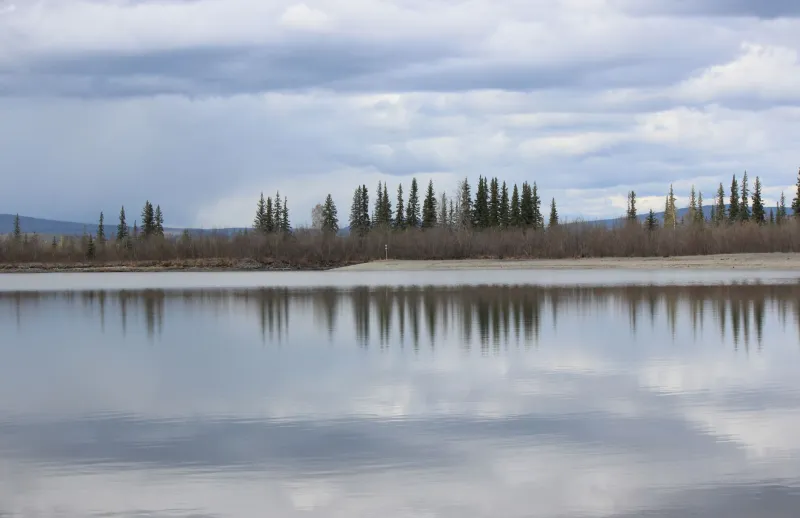
There is a particular kind of quiet that settles over a person living far from anyone who knew them before. In Alaska, where the nearest neighbor may be a thirty-minute drive and the nearest city a small-plane flight away, that quiet is not merely atmospheric. It is psychological. And for a significant number of people who have come to this state seeking clarity, renewal, or simply a cleaner version of their own story, that quiet has a shadow side: it makes self-deception extraordinarily easy.
This is not a comfortable observation to make, and it is not one that diminishes the genuine beauty or restorative potential of life in Alaska's remote communities. But honest mental health practice requires naming what landscape cannot fix on its own — and one of those things is the human tendency to construct flattering narratives about ourselves when no external perspective exists to challenge them.
When Distance Becomes a Mirror — and We Turn Away
Psychologists have long understood that self-knowledge is not a solitary achievement. We come to understand ourselves, in large part, through relationship — through the friction of disagreement, the discomfort of being truly known, and the sometimes unwelcome feedback that close community provides. Social psychologist Timothy Wilson, whose research on self-insight has influenced decades of therapeutic practice, has noted that people are remarkably poor judges of their own internal states and motivations when left entirely to their own reasoning.
In Alaska, the conditions for that kind of unchallenged self-reasoning are unusually favorable. When a person lives in genuine geographic isolation, the social mirrors that ordinarily reflect our behavior back to us are simply absent. There is no longtime friend who remembers your patterns from a decade ago. There is no family member who gently notes that you have been here before. There is no colleague who raises an eyebrow at a familiar deflection.
Without those mirrors, people do not automatically turn inward with greater honesty. Quite often, they do the opposite. They mistake the absence of contradiction for confirmation.
The Architecture of a Comfortable Story
Consider a common pattern in therapeutic practice: an individual arrives in Alaska following a painful chapter — a failed marriage, a career derailment, a relational rupture they played some role in creating. The move north is framed, consciously or otherwise, as a turning point. The harsh terrain becomes a metaphor for strength. The solitude becomes evidence of independence. The distance from the people who were present for the difficult period becomes, in the mind of the person who relocated, a kind of resolution.
But resolution and distance are not the same thing. Closing the physical gap between yourself and a painful truth requires deliberate effort — not miles.
What happens in the absence of that effort is subtle but consequential. The story of what occurred begins to shift. Details soften. Responsibility redistributes. The narrative that emerges over months and years of isolation is not necessarily false in every particular, but it is curated in ways that protect the self from the discomfort of genuine accountability. And because no one nearby knew the original version of events, there is no one to notice the revision.
This is the architecture of a comfortable story: built slowly, reinforced daily, and ultimately mistaken for self-awareness.
The Paradox of Perceived Growth
One of the more insidious dimensions of this pattern is that it can produce a convincing imitation of personal development. A person who has reorganized their internal narrative around a flattering self-image may genuinely feel that they have grown. They may speak fluently about their past, describe lessons learned, and present themselves with the composed affect of someone who has done the work.
But the behavioral signatures of unresolved patterns do not disappear simply because the story about them has been revised. They surface in new relationships that follow old scripts. They appear in the same conflicts arising with different people. They emerge in the persistent anxiety or numbness or reactivity that no amount of trail running or backcountry solitude has managed to quiet.
The psychoanalytic concept of rationalization is instructive here. Rationalization does not feel like lying — it feels like understanding. The person engaged in it is not consciously constructing a false account. They are genuinely convinced by the story they are telling. That conviction is precisely what makes the pattern so difficult to interrupt without external support.
What Genuine Perspective Practice Requires
The name of this practice — Perspective Practice AK — carries a deliberate double meaning. Perspective is not simply a vantage point one arrives at by climbing high enough or moving far enough away. It is an active discipline, something practiced rather than passively received. And in the context of psychological health, it requires turning toward discomfort rather than allowing geography to turn you away from it.
In practical terms, this means several things.
First, it means seeking relationships — therapeutic, personal, or communal — in which honesty is structurally protected. A skilled therapist provides exactly this kind of relationship: a space where the story you have been telling yourself can be examined without judgment but also without automatic endorsement. The therapeutic relationship is, in many ways, a deliberately constructed social mirror, offering the kind of perspective that isolated living quietly removes.
Second, it means developing what clinicians sometimes call reflective function — the capacity to hold your own mental states as objects of curiosity rather than fixed facts. When a person asks not only what they feel but why they feel it, and whether that feeling accurately reflects the present moment or is being shaped by older, unexamined material, they are engaging in the kind of genuine self-inquiry that comfortable isolation tends to discourage.
Third, and perhaps most importantly, it means tolerating the specific discomfort of being known — really known — by at least one other person. This is particularly challenging for individuals whose move to Alaska was motivated, consciously or not, by a desire to escape that kind of exposure. The wilderness offers no such risk. The land does not know your history, does not track your inconsistencies, and does not ask difficult questions. That is part of its appeal. It is also, in the context of psychological growth, a significant limitation.
The Honest Invitation
None of this is an argument against Alaska, against solitude, or against the real value that distance from a former life can provide. There are circumstances in which physical separation genuinely supports healing — in which the removal of a toxic environment or a harmful relationship creates the breathing room necessary for recovery to begin.
But breathing room is a beginning, not a destination. And the person who mistakes the absence of external challenge for the presence of internal growth is, in a very real sense, using the landscape as a lid rather than a lens.
The invitation of genuine perspective practice is more demanding and more rewarding than that. It asks that you bring yourself — fully, honestly, and without the protection of a carefully managed distance — into contact with the truth of your own experience. Alaska can be the setting for that work. The terrain can hold the weight of it. But the turning toward, the willingness to look at the mirror you have been avoiding, belongs entirely to you.