Filtered Frontiers: How Social Media Rewrites the Alaskan Life You Are Actually Living
There is a particular kind of dissonance that settles in when you are sitting inside a drafty cabin in late February, watching ice fog press against your windows, while your phone displays a stranger's golden-hour photo from the Kenai Peninsula. The image is luminous. The caption reads something like living my best life up here. And somewhere between the screen and your own lived moment, a quiet erosion begins.
Social media has always trafficked in selective truth. But in Alaska—a place already mythologized by outsiders and insiders alike—that selective truth carries an unusually heavy psychological cost. The Last Frontier has become, for many of its residents, both a home and a performance. Understanding how those two things came to occupy the same space is essential to reclaiming one from the other.
The Architecture of the Alaskan Feed
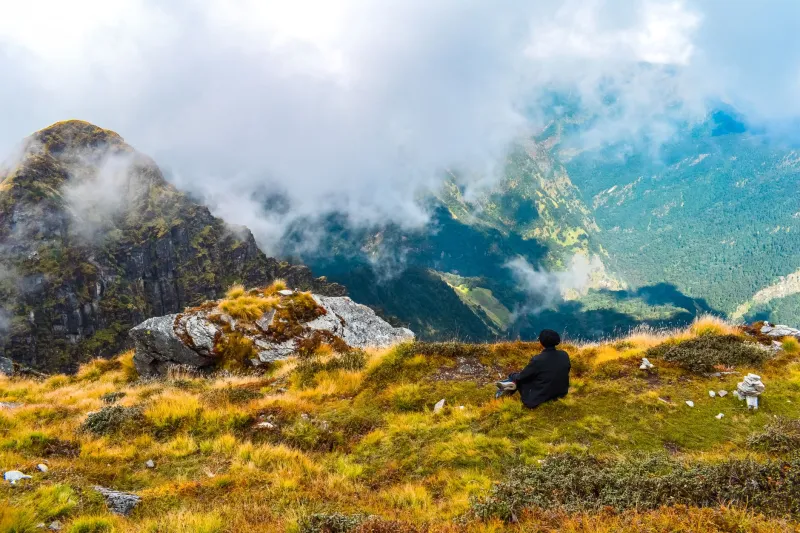
What appears on a typical Alaska-focused social media feed is not random. It is the product of deliberate curation, algorithmic reinforcement, and a cultural appetite for a very specific kind of rugged beauty. Moose in driveways. Aurora borealis over snow-draped spruce. Salmon pulled from crystal rivers. Smiling faces at summit markers.
None of these images are false. They are, however, radically incomplete. What the feed systematically excludes is the grinding arithmetic of Alaskan life: the cost of heating fuel, the weeks of relentless overcast, the loneliness that accumulates in remote communities, the medical appointments that require a flight to Anchorage, the seasonal depression that does not resolve simply because the landscape is spectacular.
When the visible record of a place is dominated by its peak moments, residents who are living through its ordinary or difficult ones begin to experience a form of narrative displacement. They are physically present in Alaska but psychologically positioned outside its idealized version, watching through a digital window at a life that feels simultaneously familiar and unattainable.
Performance Pressure in a Storied Landscape
Alaska carries enormous symbolic weight in American culture. It represents endurance, independence, proximity to something wild and uncorrupted. For people who have chosen to live here—or who were born into this terrain—that symbolism creates an implicit expectation: your life here should be worth the difficulty. It should look a certain way.
Social media amplifies that expectation into something measurable. Likes, shares, and follower counts become proxies for whether you are doing Alaska correctly. The result is a subtle but persistent pressure to document your experience in ways that validate the mythology rather than reflect the reality. You post the hike, not the panic attack that preceded it. You share the harvest, not the isolation that surrounded it.
From a clinical perspective, this pattern is worth examining carefully. When a person consistently represents their life in ways that diverge from their actual emotional experience, the gap between performed identity and felt identity widens. Over time, that gap can manifest as chronic inauthenticity, diminished self-trust, and a vague but persistent sense that something essential is missing—even when the external conditions of life appear enviable.
The Comparison That Happens Without You Noticing
Social comparison is rarely a conscious decision. Most people do not scroll through their feeds thinking, I am now going to measure my worth against this person's outdoor adventure. The process is far more automatic than that, and research in social psychology consistently demonstrates that upward social comparison—comparing yourself unfavorably to those who appear to be thriving—reliably diminishes mood and self-evaluation.
In the Alaskan context, this comparison often carries an additional layer of geographic specificity. You are not simply comparing your life to someone else's life. You are comparing your Alaska to someone else's Alaska. And because both versions exist in the same physical place, the cognitive dissonance is sharper. If they can find that much beauty, that much meaning, that much vitality in this same terrain, what does it say about you that your experience feels harder, quieter, or less photogenic?
The answer, of course, is that it says nothing meaningful at all. But the emotional response does not wait for that rational correction.
Reclaiming Presence in a Performative Landscape
The goal is not to abandon social media entirely—for many Alaskans in remote areas, digital connection is a genuine lifeline. The goal is to restore a healthy relationship between your inner life and its outward expression. Several approaches are worth considering.
Audit what you consume, not just what you post. The accounts you follow shape your psychological baseline. If your feed is dominated by aspirational Alaskan content that consistently makes your own experience feel inadequate, curation is a legitimate therapeutic act. Unfollowing is not avoidance; it is boundary-setting.
Practice deliberate non-documentation. Choose experiences—regularly and intentionally—that you do not photograph, caption, or share. Allow yourself to be in Alaska without producing Alaska for an audience. The nervous system responds differently to moments that are received rather than recorded.
Name the gap when you notice it. When you catch yourself feeling diminished after time on social media, pause long enough to identify what the comparison was and what it triggered. Naming the mechanism reduces its automatic power. This is a skill that can be developed in therapy and practiced independently.
Reintroduce honest narrative into your own sharing. This does not mean performing struggle for engagement, which is simply a different kind of inauthenticity. It means allowing your digital presence to include the ordinary, the ambivalent, and the unresolved—not as confession, but as accuracy.
Ground yourself in sensory reality. Alaska provides an extraordinary abundance of sensory experience that exists entirely outside the frame of any camera. The smell of spruce after rain. The particular quality of cold air at twenty below. The sound of a river moving under ice. These are not postable in any way that fully transmits them, and that is precisely their value. They belong to you.
When the Distortion Runs Deeper
For some individuals, the relationship between social media and self-perception has become entangled enough to warrant professional support. If you find that your sense of worth is consistently mediated by digital feedback, that you feel unable to enjoy experiences you cannot document, or that the gap between your performed and felt identity has grown difficult to bridge on your own, these are meaningful signals.
Therapy offers a space to examine not just the habit of comparison, but the underlying beliefs that make comparison feel so consequential. Often, the vulnerability to social media distortion is not really about social media at all. It is about older, more persistent questions of adequacy, belonging, and whether you are living the life you were supposed to live.
Alaska is not a backdrop. It is a place—complex, demanding, and genuinely beautiful in ways that no feed can fully capture. The most important perspective you can cultivate here is the one that belongs entirely to your own unfiltered experience.