Lean Into It: What Alaska's Unrelenting Terrain Reveals About the Psychology of Avoidance
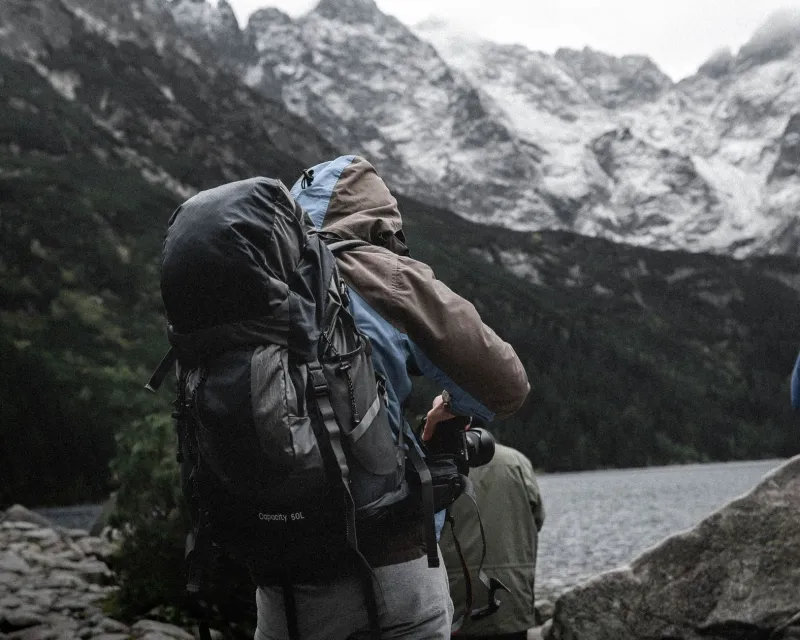
There is a particular kind of person who survives long-term in Alaska. It is not necessarily the strongest, the most physically capable, or even the most experienced outdoorsperson. It is, more often than not, the person who has learned — sometimes painfully — that resistance to difficulty is a more exhausting strategy than engagement with it.
This distinction matters far beyond the wilderness. It sits at the heart of how we understand psychological health, avoidance behavior, and the surprisingly counterintuitive process of genuine healing.
The Avoidance Trap
Avoidance is among the most well-documented contributors to sustained psychological distress. Whether expressed as geographic relocation, substance use, compulsive overwork, or simply refusing to acknowledge a problem's existence, avoidance offers short-term relief at a long-term cost. Clinically speaking, what we resist tends to persist — and frequently intensifies.
Acceptance and Commitment Therapy (ACT), one of the most empirically supported frameworks in contemporary counseling, identifies experiential avoidance as a primary driver of conditions ranging from generalized anxiety to chronic depression. The model proposes that attempting to suppress, escape, or minimize difficult internal experiences — thoughts, emotions, memories, physical sensations — paradoxically amplifies their influence over behavior.
In other words, the harder we run, the louder the thing chasing us becomes.
What the Land Demands
Alaska, almost by geographic decree, makes avoidance impractical.
Consider the practical realities: a January cold snap in the Interior does not respond to denial. A flooded river crossing cannot be wished away. A structural problem with a remote cabin, left unaddressed through the brief summer window, becomes a survival-level crisis by October. The environment demands a direct reckoning with conditions as they actually are, not as one wishes them to be.
Long-term Alaskan residents frequently describe this dynamic when reflecting on how the state has shaped their character. There is a recurring theme in these conversations — a kind of hard-won pragmatism that is less about toughness and more about honest acknowledgment. Problems do not diminish because you look away from them. In Alaska, that lesson arrives quickly.
This is not stoicism in the popular, emotionally suppressive sense. Rather, it is a cultivated willingness to assess difficult realities clearly, to name them without catastrophizing, and to engage with them directly rather than constructing elaborate routes of circumvention.
The Psychological Courage Framework
Therapists working within an Alaskan context often observe that clients who have spent significant time in remote or rural areas of the state arrive with a particular kind of practical resilience. They are frequently more tolerant of ambiguity, more accustomed to sitting with discomfort, and less likely to expect that circumstances will simply improve on their own.
This aligns closely with what psychologists sometimes call psychological flexibility — the capacity to remain in contact with difficult present-moment experiences while still moving in directions that reflect one's values. It is a skill, not a trait. And like most skills, it is developed through practice rather than innate temperament.
The Alaskan environment, in this sense, functions as an inadvertent training ground. Each winter survived, each logistical crisis navigated, each moment of genuine isolation endured without collapse contributes to an expanded window of tolerance — the psychological bandwidth within which a person can process stress without becoming overwhelmed or shutting down entirely.
Moving Toward, Not Away
In therapeutic practice, the instruction to "move toward" one's difficulties can feel deeply counterintuitive, even threatening. We are biologically wired for threat avoidance. The instinct to withdraw from pain — physical or emotional — is not pathological; it is adaptive, up to a point.
The clinical question is not whether avoidance ever serves a purpose. It does. The question is whether it has become a default strategy that now costs more than it protects.
For many individuals, the pattern looks something like this: a difficult emotion arises — grief, shame, anxiety, anger — and rather than allowing that experience to be acknowledged and processed, energy is redirected outward. A new city is chosen. A new relationship is pursued. A new project, a new identity, a new story is constructed to replace the one that feels unbearable. The geography changes. The internal landscape does not.
This is the paradox that Alaska, in its blunt and unsentimental way, tends to expose. People arrive here sometimes believing that the dramatic change of scenery will accomplish what internal work has not. The land, characteristically, disagrees.
Practical Implications for Healing
Recognizing avoidance as a pattern is the first and often most difficult step. The following principles, drawn from evidence-based practice and informed by the realities of life in Alaska's demanding environment, offer a framework for beginning to shift that pattern:
Name the avoided experience with specificity. Vague discomfort is harder to engage with than a clearly identified emotion or circumstance. "I am anxious" is a beginning. "I am anxious about what it would mean if this relationship ended" is more workable.
Distinguish between productive problem-solving and avoidance-driven action. Not all movement is avoidance. The key question is whether the action you are considering addresses the actual source of distress or simply changes its context.
Develop tolerance incrementally. Just as Alaskans do not begin their experience with a solo winter in the Brooks Range, psychological exposure to difficult material is most effective when it is graduated and supported. Working with a trained therapist provides the scaffolding that makes this process both safer and more sustainable.
Anchor to values rather than comfort. Avoidance tends to optimize for the reduction of immediate discomfort. Values-based action optimizes for meaning and integrity over time. These two orientations frequently point in opposite directions.
The Longer Road That Gets You There
There is a common observation among experienced Alaskan guides and backcountry travelers: the shortcut that bypasses difficulty is often the route that costs the most time in the end. Trails that avoid elevation gain tend to wind through unstable terrain. River crossings that seem shallow at the bank often deepen at the center.
The same principle applies to our interior lives. The route through grief, through conflict, through shame, through fear — the direct engagement with what is actually present — is rarely the comfortable path. But it is, consistently and across therapeutic traditions, the path that leads somewhere.
At Perspective Practice AK, this understanding shapes the way we approach therapeutic work. Alaska's landscape is not merely a backdrop to the healing process. For many of our clients, it is a living metaphor — and sometimes a direct teacher — of what it means to face rather than flee, to endure rather than escape, and to discover that what waits on the other side of difficulty is often more spacious than the life constructed around avoiding it.
If you find yourself circling the same struggles despite repeated changes in circumstance, it may be time to consider a different kind of movement — not away, but directly toward.