Forged by the Frontier: How Alaska's Extreme Conditions Catalyze Genuine Psychological Growth

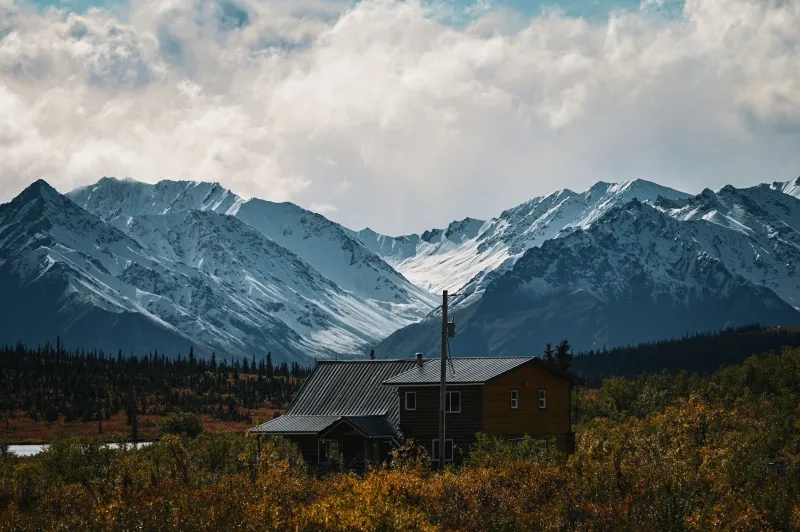
Photo: Alaska wilderness rugged landscape person standing mountain resilience, via img.freepik.com
The wellness industry has spent decades refining a singular message: reduce stress, increase comfort, and healing will follow. Soft lighting, temperature-controlled studios, and curated digital detox retreats have become the dominant symbols of mental health progress. Yet for a growing number of clinicians and researchers, this framework raises an uncomfortable question—what if comfort, pursued without restraint, is actually impeding the deeper psychological work that genuine resilience requires?
In Alaska, that question is not theoretical. It is lived daily.
The Paradox at the Center of Alaskan Life
Alaska presents a set of environmental realities that most therapeutic models were never designed to accommodate. Temperatures that drop to minus forty degrees Fahrenheit, communities separated from the nearest hospital by hundreds of miles of wilderness, winters that extinguish daylight for months at a stretch—these are not background inconveniences. They are central facts of existence for hundreds of thousands of people.
And yet, clinicians practicing in Alaska frequently observe something that defies the comfort-centered model of healing: clients who have navigated these conditions with intentionality and support often demonstrate a quality of psychological depth and self-awareness that is genuinely uncommon. They have, in the language of contemporary psychology, experienced post-traumatic growth—not despite their environment, but in direct relationship with it.
This is the resilience paradox. The harshest setting in the continental United States appears, under the right conditions, to generate some of its most grounded and emotionally capable individuals.
What Neuroscience Says About Stress and Growth
The science underlying this phenomenon is well established, even if its application to therapeutic practice remains underexplored. Researchers studying post-traumatic growth—a concept formalized by psychologists Richard Tedeschi and Lawrence Calhoun in the 1990s—have consistently found that moderate to significant adversity, when processed within a supportive relational context, tends to produce measurable improvements in psychological functioning.
The neurological mechanism involves the prefrontal cortex, the brain region responsible for executive function, emotional regulation, and meaning-making. When individuals face genuine hardship and are required to problem-solve in the absence of easy solutions, this region is activated in ways that routine, low-stakes environments simply do not demand. The result is not just coping—it is cognitive and emotional reorganization at a structural level.
Alaska provides this kind of demand in abundance. A family in a rural Alaskan village managing a medical emergency with no road access is not engaging in a therapeutic simulation. They are exercising real-world executive function, relational coordination, and emotional containment under genuine pressure. The neurological training effect is correspondingly real.
Stories from the Field: Growth Shaped by the Land
Within clinical settings across Alaska, patterns emerge that are difficult to attribute to coincidence. Consider the experience of individuals who relocate to remote communities expecting a simpler life, only to encounter a level of psychological demand they were entirely unprepared for. Many describe an initial period of profound disorientation—what some clinicians have termed an "identity audit," in which the coping mechanisms and social scaffolding that functioned adequately in urban environments simply cease to apply.
For those who remain and engage with therapeutic support during this period, the subsequent growth is often described as irreversible. They report a recalibrated sense of what genuinely matters, a sharper awareness of their own emotional patterns, and a capacity for tolerating uncertainty that they did not possess before.
Long-term Alaskan residents—particularly those in Indigenous communities who have maintained cultural practices across generations of environmental hardship—frequently demonstrate a form of grounded equanimity that clinical researchers find notable. This is not the absence of struggle; it is a sophisticated relationship with struggle, one developed through sustained exposure and communal processing.
The Therapeutic Implications: Rethinking Comfort as a Clinical Goal
None of this is an argument for manufacturing suffering or abandoning the legitimate role of safety and stabilization in mental health treatment. Trauma-informed care remains foundational, and no responsible clinician would suggest that distress is inherently therapeutic.
The more precise clinical insight is this: the goal of therapy should not be the elimination of discomfort, but the cultivation of the capacity to remain present and functional within it. Alaska's environment provides an unusually direct education in exactly that capacity.
At Perspective Practice AK, this understanding shapes the way therapeutic work is approached. Rather than framing the Alaskan environment as a clinical obstacle to be managed, it can be engaged as a genuine therapeutic partner. The darkness of winter, the silence of remote terrain, the physical demands of subsistence living—each of these can be examined in session not as sources of pathology, but as invitations to understand one's own psychological architecture more clearly.
Practical Applications: Working With the Environment Rather Than Against It
For individuals living in Alaska who are engaged in therapeutic work, several practices align with the research on stress-induced growth:
Deliberate reflection after environmental challenges. Rather than allowing difficult experiences—a power outage, a storm-bound week, a supply shortage—to pass without processing, intentionally examining what those experiences revealed about personal values, relational patterns, and emotional responses can accelerate self-awareness significantly.
Community as clinical resource. Alaska's small communities, while sometimes isolating, also provide a density of shared experience that urban environments rarely replicate. Engaging authentically with neighbors and community members around shared challenges constitutes a form of informal group processing that has documented psychological benefits.
Reframing hardship without minimizing it. There is an important distinction between toxic positivity—the dismissal of genuine suffering—and post-traumatic reframing, which involves extracting meaning from difficulty without denying its weight. A skilled therapist can help clients navigate this distinction.
Conclusion: The Frontier as a Mirror
Alaska has never been a gentle landscape. It does not offer the conditions that the wellness industry typically markets as prerequisites for healing. What it offers instead is something considerably more demanding and, for many people, considerably more transformative: an environment that strips away distraction and confronts individuals with themselves.
The resilience that emerges from that confrontation—when supported by skilled therapeutic guidance and genuine community connection—is not a consolation prize for enduring hardship. It is one of the most substantive forms of psychological growth available. Understanding that distinction may be among the most important contributions that Alaskan clinical practice can offer to the broader field of mental health.