Measured Against Mountains: How Alaska's Grandeur Quietly Erodes Your Sense of Self-Worth
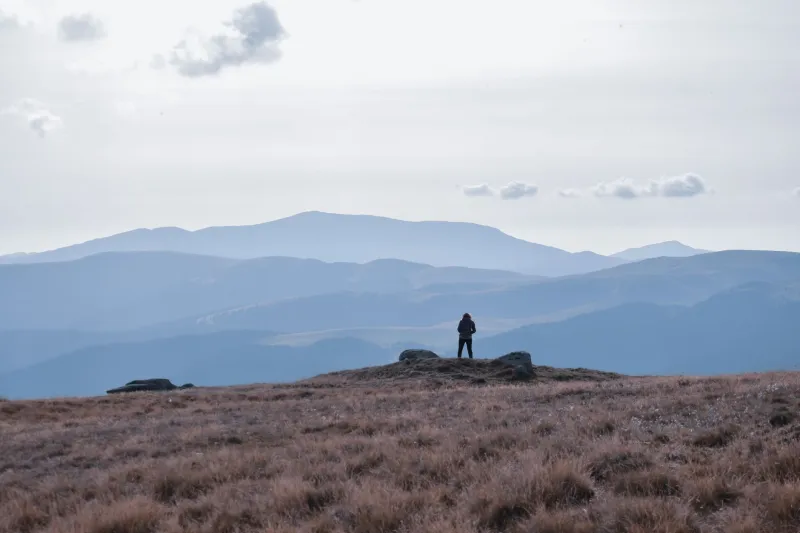
There is a particular kind of silence that settles over a person standing at the base of Denali. It is not peaceful silence. It is the silence of feeling suddenly, inexplicably small — not just physically, but existentially. For many Alaskans and long-term residents, that feeling does not stay on the mountain. It follows them home.
Alaska is, by nearly every measure, a place of extremes. Its peaks are higher, its coastlines more jagged, its winters more punishing, and its wildlife more formidable than almost anywhere else on the continent. That grandeur is part of what draws people here. But beneath the awe lies a psychological undercurrent that receives far too little attention: the quiet, relentless pressure to match the landscape.
When the Environment Becomes a Measuring Stick
In many parts of the country, social comparison tends to revolve around professional status, material possessions, or academic credentials. In Alaska, the currency is different. Here, the comparisons are more likely to involve how many miles you ran on the Resurrection Pass Trail, whether you harvested your own moose this season, or how calmly you handled a late-season storm.
This is not incidental. Alaska's cultural identity is deeply woven with narratives of resilience, self-sufficiency, and physical mastery. Those narratives carry genuine value — they have helped communities survive genuinely harsh conditions for generations. But when they become the primary framework through which individuals measure their worth, the consequences can be quietly devastating.
Psychologists refer to this broader phenomenon as contingent self-esteem — a condition in which a person's sense of value rises and falls based on external performance rather than remaining stable and internally anchored. In Alaska's outdoor-achievement culture, contingent self-esteem often develops around very specific metrics: physical endurance, wilderness competency, and the ability to project toughness in the face of adversity.
The person who cannot keep up on a group hike begins to wonder whether they belong here at all. The newcomer who struggles through their first winter questions whether they have what it takes. The longtime resident who sustains an injury and can no longer participate in the activities that defined their social identity may experience something closer to an identity crisis than a temporary setback.
The 'Bigger, Bolder' Distortion
Alaska's landscape creates a specific cognitive distortion that therapists working in this region frequently encounter. Because the natural environment is so consistently dramatic — because the backdrop of daily life includes glaciers, volcanoes, and skies that seem too wide to be real — ordinary human experience can begin to feel insufficient by comparison.
This distortion operates subtly. A person may not consciously think, I am less valuable because I have not summited that peak. Instead, the feeling arrives as a vague dissatisfaction, a sense that they are not quite living up to something undefined but enormous. They see the social media posts from neighbors who completed an ultramarathon, the coworker who just returned from a solo float plane trip to a remote lake, the community member whose subsistence harvest feeds their entire family through winter. Each image, each story, each casual mention of an achievement functions as an invisible benchmark.
Over time, these benchmarks accumulate. What began as admiration can quietly transform into a distorted self-assessment — one in which a person's genuine strengths, relational gifts, creative capacities, and emotional intelligence are rendered invisible because they do not translate into the dominant cultural vocabulary of conquest and endurance.
The Particular Weight of Community Narrative
Small and mid-sized Alaskan communities intensify this dynamic in ways that larger urban environments do not. When your social world is contained — when you see the same people at the hardware store, the school gym, and the trailhead — the pressure to be seen as capable and self-sufficient is not abstract. It is immediate and personal.
In these communities, vulnerability is often treated as a liability. Admitting that you are struggling emotionally, that you feel overwhelmed, or that you are not sure you belong here can feel like a social risk. And so people perform resilience even when they do not feel it — which deepens the disconnection between their internal experience and the identity they project outward.
This performance is exhausting. And it is one of the most common themes that emerges in therapeutic work with Alaskan residents: the fatigue of maintaining an image of competence in a culture that treats competence as a baseline expectation rather than an achievement.
Reclaiming an Identity the Landscape Cannot Measure
The therapeutic work of disentangling self-worth from external achievement is not unique to Alaska, but the specific contours of that work here require a regionally informed approach. Several strategies have proven particularly effective.
Naming the distortion directly. One of the most immediate interventions involves helping individuals identify the specific benchmarks they have unconsciously adopted. What does good enough look like in their internal framework? Where did that standard come from? Is it genuinely their own, or did they inherit it from the cultural environment around them? Simply naming the distortion reduces its power considerably.
Expanding the vocabulary of value. People who have organized their identity around physical achievement often have a remarkably limited vocabulary for describing their non-physical strengths. Therapeutic work can involve deliberately identifying and articulating qualities — patience, curiosity, generosity, creativity, emotional attunement — that have nothing to do with outdoor performance. This is not a rejection of Alaska's outdoor culture; it is an expansion of the self beyond it.
Developing unconditional self-regard. Acceptance and Commitment Therapy (ACT) and related approaches offer structured methods for building a stable sense of self that is not contingent on performance. These approaches help individuals observe their thoughts and feelings without being defined by them — a capacity that is especially useful in a culture that equates emotional steadiness with the suppression of vulnerability.
Mindful engagement with the landscape. Interestingly, one of the most effective tools for counteracting Alaska's comparison culture is a different kind of relationship with the land itself. Rather than approaching wilderness as a venue for achievement, individuals can be guided toward receptive, contemplative engagement — being present in nature without measuring themselves against it. Alaska's landscape, experienced this way, becomes a source of grounding rather than a source of inadequacy.
The Perspective That Changes Everything
Alaska does not diminish you. But the stories a culture tells about what it means to belong here sometimes do. The mountains are not watching. They are not keeping score. The comparison trap exists entirely within the human mind — which means it can be examined, challenged, and ultimately released.
Building genuine self-worth in Alaska — or anywhere — requires the courage to step outside the dominant metrics and ask a quieter, more honest question: Who am I when no one is measuring? The answer to that question is where real psychological health begins.
If you find yourself caught in patterns of comparison, achievement-dependent self-esteem, or a persistent sense that you are not quite measuring up to the life Alaska seems to demand, speaking with a licensed therapist can offer both clarity and relief. At Perspective Practice AK, we work with individuals navigating exactly these challenges — with an understanding of the unique cultural and environmental context that shapes life in this remarkable place.