When Adventure Becomes Armor: Recognizing Emotional Avoidance Behind Alaska's Culture of Conquest
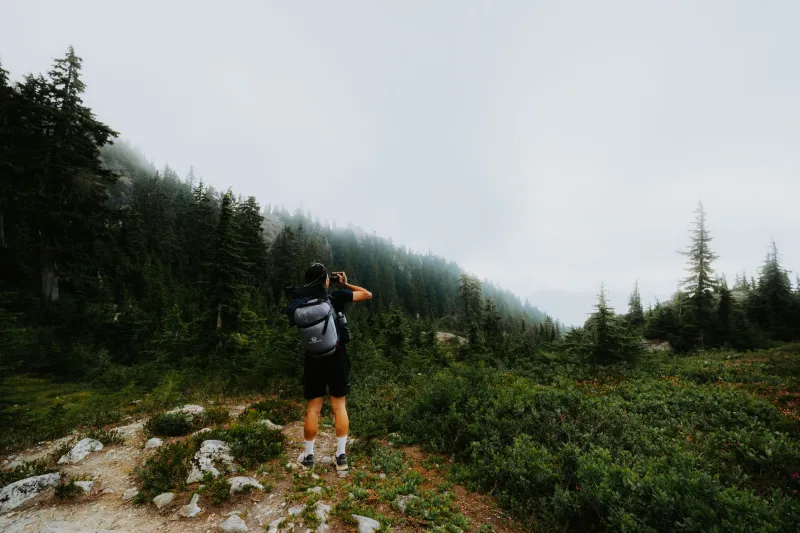
There is a particular kind of pride that runs through Alaskan culture—a pride rooted in endurance, physical capability, and the willingness to go further than most people would dare. It is not an unfounded pride. The demands of life in this state are genuinely extraordinary. People who run hundred-mile ultramarathons through subarctic terrain, who spend months on commercial fishing vessels in the Bering Sea, or who push into remote backcountry on multiweek expeditions have accomplished something real. That accomplishment deserves acknowledgment.
And yet, within clinical practice, a more complicated picture sometimes emerges. For some individuals, the relentless pursuit of physical extremity is not simply a celebration of capability. It is a strategy—often unconscious, often highly effective in the short term—for keeping something else at bay.
The Seduction of Forward Motion
Avoidance, as a psychological concept, is frequently misunderstood. Most people associate it with passivity: staying in bed, withdrawing from social contact, refusing to engage. But avoidance is not always quiet. It can be loud, decorated with medals, and celebrated by an entire community.
When a person is in motion—truly exhausting motion—there is very little room for the interior life to surface. Cortisol is elevated. Attention is demanded by immediate physical circumstances. The body's survival systems are engaged. In this state, grief cannot easily find a foothold. Anxiety about a failing relationship recedes when you are navigating a glaciated ridgeline. The weight of unprocessed trauma becomes temporarily imperceptible when you are fifty miles into a race with fifty more to go.
This is not a flaw unique to Alaskans. Human beings across all cultures find ways to stay busy enough that the inner life cannot interrupt them. What distinguishes the Alaskan context is the extraordinary range and social legitimacy of the tools available for this purpose. Extreme activity is not merely tolerated here—it is venerated. A person who keeps themselves perpetually occupied with dangerous, impressive physical challenges may receive nothing but admiration from their peers, their family, and their community, even as the underlying pain that drives them forward continues to compound.
How Therapists Recognize the Pattern
In a clinical setting, distinguishing between healthy engagement with challenging activities and avoidance-driven behavior requires careful, patient inquiry. The activities themselves are rarely the diagnostic signal. What matters is the relationship a client has with those activities—specifically, what happens when they are removed.
A useful question is: What does stillness feel like for you?
For individuals who pursue extreme activities from a place of genuine vitality, rest is generally accessible. It may not always be comfortable, but it is not experienced as threatening. For those whose activity functions as armor, stillness often produces something closer to dread. Anxiety spikes. Intrusive thoughts surface. A pervasive sense of purposelessness or emptiness descends. The person may describe this not as grief or fear, but simply as a conviction that they need to be doing something—that inactivity is weakness, that rest is waste.
Another signal is escalation. Activities that once provided adequate relief begin to require greater intensity to produce the same effect. The half-marathon becomes a full marathon becomes an ultramarathon becomes a multiday wilderness traverse. This escalation can look like ambition, and sometimes it is. But it can also mirror the tolerance patterns seen in other avoidance behaviors, including substance use—a parallel worth examining without judgment.
The Cultural Current Running Against Insight
One of the more significant challenges in working with Alaskan clients around this pattern is the degree to which the surrounding culture actively reinforces it. The ethos of self-sufficiency, of meeting hardship without complaint, of proving one's worth through endurance—these values are not pathological in themselves. They have helped people survive genuinely brutal conditions for generations, both among Alaska Native communities and among those who arrived more recently.
But values that serve survival can sometimes impede healing. A client who has been raised to believe that emotional difficulty is something to be pushed through rather than examined may experience the therapeutic process itself as a form of weakness. Sitting with a counselor and exploring the interior landscape can feel far more threatening than running fifty miles in the dark.
This is not a failure of character. It is a reflection of a cultural context that has not always created space for the kind of inward attention that psychological health requires. Part of the work, for both client and therapist, involves gently expanding that cultural framework—honoring the genuine virtues of resilience and endurance while introducing the possibility that examining one's inner life is itself a form of courage.
What Genuine Healing Through Activity Can Look Like
It is important to be clear: the goal is not to discourage Alaskans from the activities that give their lives meaning, texture, and community. Physical challenge, time in wilderness, and engagement with the natural world are legitimate sources of psychological nourishment. Research consistently supports the mental health benefits of outdoor activity, and Alaska's landscape offers these in a form that is genuinely extraordinary.
The distinction that matters is one of intentionality and integration. When a person engages with a challenging activity while remaining present to their emotional experience—when they allow the difficulty to illuminate rather than obscure what is happening inside them—the activity can become genuinely therapeutic. The wilderness becomes a context for reflection rather than an escape from it.
Some clients find that structured therapeutic approaches, such as mindfulness-based practices or somatic therapies, help them develop the capacity to remain present with their inner experience even in the midst of physical intensity. Others benefit from working with a therapist to examine what specifically they are seeking when they plan an expedition or sign up for a race—and what they might be hoping to leave behind.
The Courage of Looking Inward
There is a certain irony in the observation that some of Alaska's most physically fearless individuals are running, quite literally, from the one terrain they have not yet dared to enter: their own interior landscape.
The work of therapy does not ask anyone to abandon the mountains, the rivers, or the long trails. It asks something arguably more demanding—that alongside all of that motion, a person also learn to be still. That they allow themselves to be known not only by what they can endure, but by what they feel, what they grieve, and what they need.
At Perspective Practice AK, we recognize that healing in this state requires meeting clients where they are—culturally, geographically, and psychologically. If you are beginning to wonder whether your pursuits are carrying you toward something or away from it, that question itself is worth exploring. Reaching out to a qualified therapist is not a retreat from the Alaskan spirit. It may be the most honest expression of it.