Same Story, New Scenery: Why Alaska Cannot Rewrite the Patterns You Carry Within
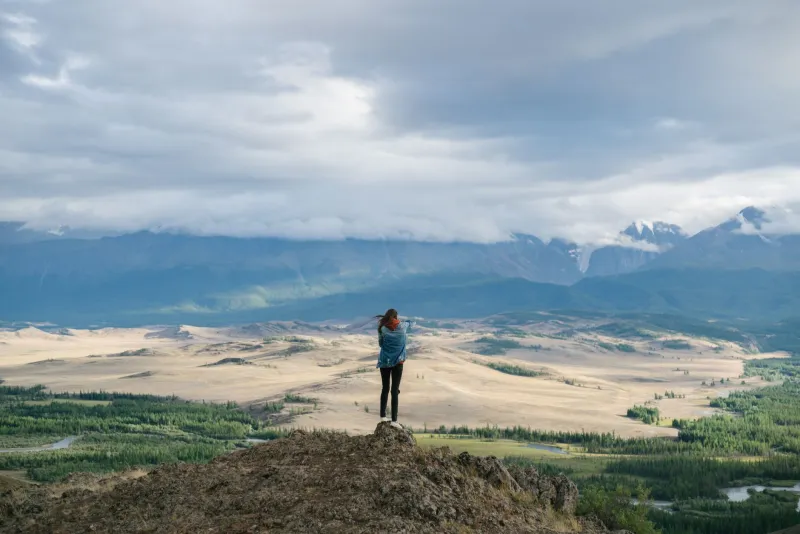
There is something undeniably seductive about the idea of beginning again. For many people who arrive in Alaska, the decision to relocate carries a quiet, urgent hope: that mountains broad enough to fill an entire horizon, skies untouched by city light, and distances that swallow ordinary life might somehow swallow old selves as well. The fantasy is understandable. What it rarely is, however, is sufficient.
At Perspective Practice AK, we work with individuals across a wide range of circumstances, and among the most consistent themes we encounter is what clinicians sometimes call geographic cure seeking—the belief that a change of environment will accomplish what internal work has not. Alaska, with its extraordinary capacity to inspire awe and demand resilience, attracts this impulse in particularly concentrated form. Understanding why requires an honest examination of the psychology beneath the move, not merely the logistics of it.
The Psychology of the Fresh Start
Human beings are wired to associate novelty with possibility. When a new environment floods the brain with unfamiliar stimuli, it can genuinely feel as though the past has loosened its grip. Research in environmental psychology confirms that physical surroundings influence mood, cognition, and even identity—at least temporarily. This is not imaginary. The problem arises when that temporary neurological novelty is mistaken for permanent psychological transformation.
Psychologists refer to this phenomenon as self-continuity: the recognition that our core patterns of thought, emotional regulation, and relational behavior travel with us regardless of setting. A person who struggles with chronic anxiety in Ohio does not leave that anxiety at the state line. Someone whose relationships consistently dissolve due to avoidant attachment does not shed that attachment style upon crossing into the Last Frontier. The setting changes; the script does not—not without deliberate intervention.
What Alaska uniquely amplifies is the intensity of this illusion. The landscape is so dramatic, the contrast with lower-48 life so stark, that the psychological jolt of arrival can feel indistinguishable from genuine inner change. For weeks, sometimes months, the sheer novelty of navigating a new terrain, community, and climate can occupy the mental space that unresolved emotional patterns might otherwise fill. It is only when the novelty fades—and it always fades—that the familiar ache returns, often with added confusion about why this place, of all places, did not fix things.
When Relocation Becomes Avoidance
Consider a composite picture drawn from the kinds of experiences we hear about regularly in therapeutic settings. An individual leaves a metropolitan area following a painful divorce, a career failure, or a prolonged episode of depression. Alaska represents, in their mind, a clean break—a place where no one knows their history, where physical challenge might substitute for emotional reckoning, and where the very remoteness of daily life offers a socially acceptable reason to withdraw from intimacy.
For a time, this works. The demands of Alaskan living—managing heating systems, navigating supply logistics, adapting to seasonal extremes—provide genuine structure and even a sense of competence. Neighbors may be few. Social obligations feel lighter. The wilderness absorbs hours that might otherwise be spent in the discomfort of self-reflection.
But avoidance, by definition, does not resolve what it avoids. The emotional debt accumulates. Relationships formed in the new location begin to mirror the dynamics of those left behind. The same communication breakdowns, the same defensive reactions, the same cycles of connection and withdrawal—they resurface, now framed against a backdrop of spruce trees and frozen rivers rather than suburban streets. The geography is different. The pattern is identical.
This is not a failure unique to Alaska, nor is it a criticism of those who experience it. It is, rather, a predictable consequence of conflating environmental change with psychological change.
Distinguishing Purposeful Relocation from Escape
It would be an overstatement—and an inaccurate one—to suggest that moving to Alaska is inherently problematic or that no genuine growth can accompany a geographic transition. Many people relocate to this state for sound, considered reasons: family, career, a meaningful connection to land and community, or a well-examined desire for a different quality of life. The distinction between purposeful relocation and escapism is not always obvious from the outside, but it tends to be discernible from within.
Several questions are worth sitting with honestly before or after a major move:
What specifically am I leaving, and what am I moving toward? Healthy relocation is typically characterized by a clear affirmative vision—a community, an opportunity, a lifestyle—rather than a primary motivation to exit. When the dominant narrative is escape rather than arrival, that asymmetry deserves attention.
Have I addressed, or am I actively working on, the issues I associate with my previous location? If the answer is no, relocation is likely to defer rather than dissolve those issues. Alaska's isolation can make accessing therapeutic support more logistically challenging, which can further entrench avoidance patterns if the intention to seek help is not explicit and proactive.
Am I romanticizing difficulty as a substitute for emotional work? Alaska's physical demands are real and not trivial. There is genuine value in meeting them. But physical hardship is not emotional processing, and the two should not be conflated. Chopping wood does not resolve unprocessed grief. A winter storm does not renegotiate the terms of a damaged relationship.
Would my most trusted relationships recognize this decision as growth, or as running? The people who know us well often perceive our patterns more clearly than we do ourselves. Their perspective, while not definitive, is worth inviting.
The Work That Geography Cannot Do
True perspective shifts—the kind that alter how we relate to ourselves and others in lasting ways—require what Alaska's landscape, for all its grandeur, cannot provide: deliberate, sustained self-examination. This typically means engaging with a qualified therapist or counselor, developing consistent practices of reflection, and cultivating the willingness to remain present with discomfort rather than relocating away from it.
At Perspective Practice AK, we hold deep respect for the people who choose to build their lives in this extraordinary state. We also hold deep respect for the complexity they carry with them. Alaska can be a meaningful part of a healing journey. Its rhythms, its demands, and its community can offer genuine support to those engaged in genuine inner work. What it cannot be is a replacement for that work.
The perspective trap is not about Alaska specifically. It is about the very human tendency to seek external solutions for internal problems. Recognizing that tendency—naming it without shame, and choosing to engage with it directly—is itself the beginning of the kind of transformation that no landscape, however breathtaking, can substitute for.
If you have arrived in Alaska carrying something unresolved, you are not alone, and you are not without options. The work is available to you here, just as it would have been anywhere else. The difference is that here, you have already stopped running. That, at least, is a start.