What the Seasons Know: Using Alaska's Natural Cycles to Navigate Grief and Loss
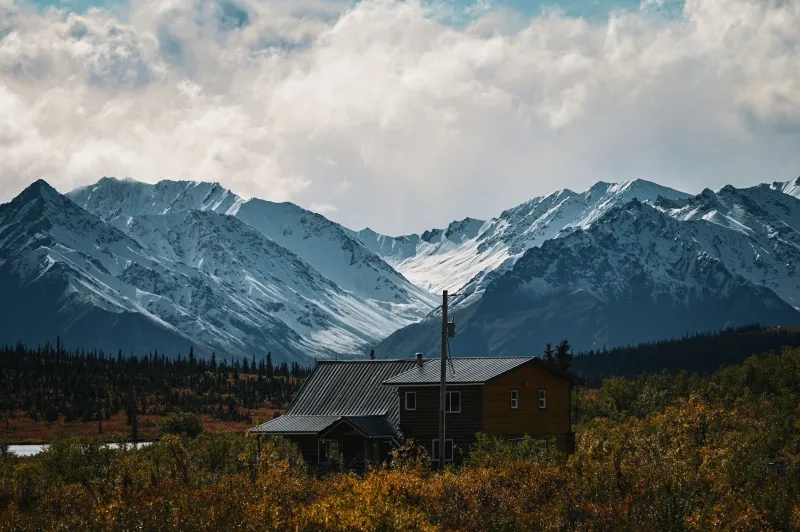
In Alaska, nothing stays. The midnight sun that floods July with impossible light is gone by September. The fireweed that blazes pink across entire hillsides completes its bloom in a matter of weeks. Even the rivers change character—swollen and turbulent in spring, quiet and glassy by late summer. For long-term Alaskan residents, this impermanence is simply the texture of daily life. But for those carrying grief, the land's relentless turning can feel like an accusation: everything moves on, so why can't you?
The answer, it turns out, is more nuanced—and more hopeful—than that question implies.
Grief and the Alaskan Calendar
Grief does not follow a schedule. Clinical frameworks such as the well-known stage models offer useful language, but they can also create unrealistic expectations about how loss should progress. One of the more damaging assumptions many people carry is that grief is linear—that it moves steadily from pain toward resolution, much like a highway from one city to the next.
Alaska's seasons suggest otherwise. Spring in the Interior does not arrive cleanly; it announces itself in mud and false warmth, retreating twice before it commits. A week of sixty-degree temperatures in April can give way to fresh snow. Anyone who has lived through an Alaskan spring recognizes this pattern not as failure, but as process. Grief operates similarly. A person may feel genuine lightness for several weeks, only to find themselves undone by a particular smell, a song, or the anniversary of a loss they thought they had "worked through."
Framing these setbacks as natural—as part of a cycle rather than evidence of personal failure—can meaningfully reduce the secondary suffering that often accompanies grief. Therapists working with Alaskan clients frequently observe that residents who have made peace with the land's unpredictability often bring a similar tolerance for nonlinearity to their emotional lives.
The Briefness of Summer as Teacher
Alaska's summer is extraordinary precisely because it is short. Residents do not take warm evenings for granted; they understand, sometimes viscerally, that each one is borrowed time. This awareness creates a quality of presence that is harder to cultivate in climates where pleasant weather is the reliable norm.
Loss, viewed through this lens, carries its own instruction. What we grieve, we once cherished. The intensity of mourning is, in a very real sense, a measure of the value we assigned to what we have lost—a relationship, a version of ourselves, a person, a way of life. Alaska's summer teaches that brevity does not diminish meaning. A friendship that lasted three years is not less significant than one spanning three decades. A chapter of life that ended abruptly is not therefore wasted.
For individuals processing loss, deliberately reconnecting with this perspective—perhaps by spending time outdoors during the shoulder seasons, when beauty and endings coexist most visibly—can shift the emotional relationship to grief from one of resistance to one of recognition.
Dormancy Is Not Death
One of the most clinically useful reframes available to Alaskans processing loss is the distinction between dormancy and death. In the natural world, the birch tree that stands bare and apparently lifeless in November is not dying; it is conserving, waiting, reorganizing its resources for a return that is already written into its biology.
Grief has its own dormant phases. There are periods when a person in mourning may feel numb, disengaged, or strangely flat—not sad, exactly, but not present either. These states can be frightening, particularly in a culture that tends to equate emotional activity with progress. But just as the Alaskan landscape is not wasted during winter, the psyche is not idle during periods of apparent stillness. Integration, consolidation, and the slow reorganization of identity are happening beneath the surface.
Therapeutic approaches that honor this reality—including certain mindfulness-based practices, somatic therapies, and narrative therapy frameworks—encourage clients to sit with dormant phases rather than pathologize them. The goal is not to manufacture emotion, but to trust the process that is already underway.
Letting the Land Witness
Traditional Alaskan cultures have long understood that the natural world holds a witnessing function—that grief expressed in relationship to the land carries a different quality than grief processed entirely indoors, in isolation from the cycles that surround human experience. While contemporary therapy rightfully centers the therapeutic relationship as a primary vehicle for healing, spending time in natural settings during grief is increasingly supported by research.
Ecotherapy and nature-based therapeutic practices have documented benefits for individuals experiencing bereavement, depression, and emotional disconnection. For Alaskans, access to meaningful natural environments is rarely the limiting factor. What is often missing is permission—permission to grieve outdoors, to stand at the edge of a frozen lake and speak a name aloud, to watch ice break up on a river and allow that dissolution to mean something personal.
This is not magical thinking. It is the use of metaphor and environment as psychological tools, a practice with deep roots in both indigenous wisdom and evidence-based clinical work.
Practical Guidance for Working Through Loss in Alaska
For those currently navigating grief, the following approaches are grounded in both clinical research and the particular realities of Alaskan life:
Align your expectations with the season. If you are in the depths of loss during winter, understand that the conditions—reduced light, limited social contact, physical constriction—will amplify emotional weight. This is not a sign that you are grieving incorrectly. It is a sign that you are human, living in Alaska.
Use seasonal transitions as intentional markers. The shift from winter to spring, or from summer to fall, can serve as a meaningful moment to acknowledge where you are in your grief. Some individuals find it helpful to write a brief reflection at each solstice or equinox—not to measure progress, but to honor continuity.
Seek support that understands your context. A therapist familiar with Alaska's psychological landscape—including the compounding effects of seasonal light changes, geographic isolation, and community-specific stressors—will be better equipped to support grief work in a way that feels grounded and relevant.
Allow for incompleteness. Grief does not resolve the way a medical condition resolves. Like the seasons, it transforms. The goal is not to arrive somewhere beyond grief, but to carry it differently—with less weight, more integration, and a clearer sense of what it means about who you are and who you loved.
Closing Reflection
Alaska does not promise comfort. It promises change, and within that change, an honest accounting of what endures and what does not. For those in the midst of loss, this can feel cold. But the land's cycles also carry an undeniable message: after every dormancy, something returns. Not the same as before—but alive, and continuing.
At Perspective Practice AK, we work with individuals navigating grief, transition, and loss within the specific emotional and environmental context of Alaskan life. If you are ready to explore what healing looks like for you, we invite you to reach out.