Seen and Doubted: How Alaska's Close-Knit Communities Fuel the Imposter Within

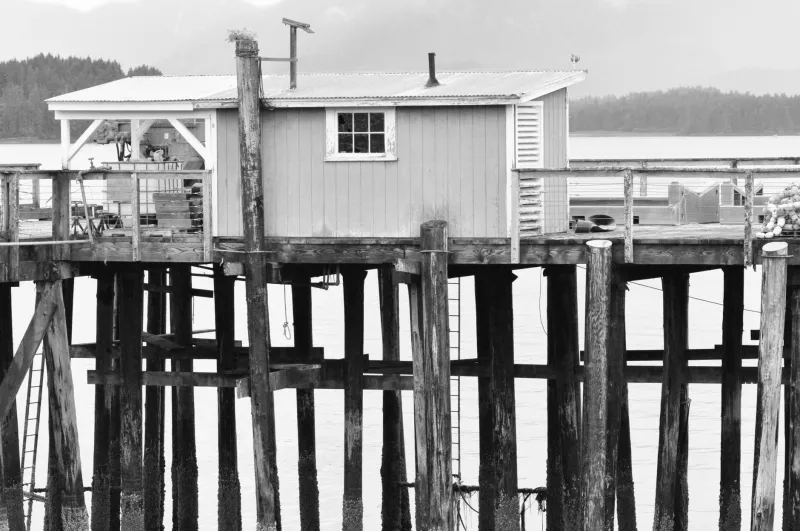
Photo: Doug Wilson, Public domain, via Wikimedia Commons
There is a particular kind of anxiety that arrives not in the wilderness, but at the post office. At the school board meeting. At the one coffee shop in town where the same twelve people rotate through every morning. In Alaska's smaller communities, being known is not optional — it is simply the condition of living there. And while that visibility carries genuine warmth and belonging, it also creates a psychological environment in which imposter syndrome can quietly take root and grow.
Imposter syndrome — the persistent internal experience of feeling fraudulent, undeserving, or secretly unqualified despite clear external evidence of competence — is not unique to Alaska. Researchers have documented it across professions, demographics, and geographies for decades. But the structural features of Alaska's tight-knit communities have a way of amplifying its most corrosive elements in ways that deserve careful attention.
When Everyone Knows Your Résumé
In a large metropolitan area, your professional identity is largely self-managed. You choose what to share, with whom, and when. In a small Alaskan town, that luxury rarely exists. People know when you were hired, when you were passed over, when you made a decision that didn't land well, and when you showed up to a meeting underprepared. The social fabric is dense and long-memoried.
For someone already wrestling with imposter syndrome, this transparency functions less like community accountability and more like a spotlight pointed directly at every moment of uncertainty. The internal monologue — I don't really belong here; they're going to figure that out — is no longer a private fear. It becomes something that feels, however irrationally, like it could be confirmed at any moment by the very people sitting across from you at the borough assembly.
This is not a reflection of any malicious intent on the part of those communities. It is simply what happens when the psychological vulnerabilities of imposter syndrome encounter an environment where privacy is structurally limited.
The Competence Illusion and the Alaskan Standard
Alaska has a cultural tendency to celebrate extraordinary capability. The person who built their own cabin, who runs a fishing operation single-handedly, who holds three roles in a volunteer fire department while raising children in a remote village — these are not unusual archetypes here. They are the baseline expectation in many communities.
When that standard becomes the invisible benchmark against which people measure themselves, ordinary competence begins to feel like inadequacy. A social worker newly placed in a rural community may be genuinely skilled and deeply committed, yet feel perpetually behind the unspoken curve of what Alaskan resilience supposedly looks like. A business owner in a small coastal town may have built something real and sustainable, yet dismiss their own success because they know someone in the same community who accomplished more with less.
This is the comparison trap in its most insidious form: not the obvious, hostile kind of comparison, but the ambient, normalized kind that quietly convinces you that your accomplishments require an asterisk.
How the 'Everyone Is Watching' Dynamic Distorts Self-Perception
Psychologists refer to a cognitive phenomenon called the spotlight effect — the tendency to overestimate how much other people notice and remember our actions. In most contexts, research consistently shows that others are paying far less attention to us than we assume. But in a small Alaskan community, the spotlight effect is partially real. People do notice. They do remember. And that partial truth makes the distortion harder to correct.
When your professional stumbles genuinely are visible to your neighbors, colleagues, and the parent of your child's best friend, it becomes difficult to apply the usual reassurance that no one is paying that much attention. The imposter's fear — that exposure is imminent — feels grounded in actual social reality rather than cognitive distortion. This is what makes imposter syndrome in small-community settings particularly resistant to standard reassurances.
The therapeutic work, then, is not simply to challenge the thought they're all watching me fail. It requires a more nuanced examination: What does it mean for my sense of worth if some of them are? And is my value genuinely conditional on their assessment?
Practical Strategies for Building Confidence in Visible Environments
Addressing imposter syndrome in Alaska's community contexts requires approaches that account for the real social dynamics at play, rather than dismissing them.
Separate observation from judgment. Being seen is not the same as being evaluated. And being evaluated is not the same as being found wanting. Practicing the deliberate cognitive separation of these three things — visibility, assessment, condemnation — can interrupt the automatic chain of anxiety that small-community life can trigger.
Document your competence privately. When external validation is complicated by social proximity, an internal record becomes more important. Keeping a private log of accomplishments, sound decisions, and moments of genuine effectiveness provides an evidence base that is yours alone — not subject to community narrative or reinterpretation.
Identify the comparison targets you've chosen. Imposter syndrome rarely compares us to our actual peers. It typically selects the most accomplished, most resilient, most visible person in the room and uses them as the standard. Naming that process explicitly — recognizing that you have unconsciously selected an outlier as your benchmark — can begin to loosen its grip.
Seek therapeutic support outside your immediate social network. One of the structural challenges of small Alaskan communities is that the therapist, the pastor, and the school principal may all attend the same community events. Working with a counselor who operates at some remove from your daily social world — whether through a practice that serves multiple communities, or through telehealth — can provide the psychological safety necessary for honest self-examination without the added weight of local visibility.
Practice tolerating imperfection in public. This is uncomfortable, but it is also essential. When imposter syndrome governs behavior, people tend to over-prepare, over-explain, and over-correct in an attempt to prevent exposure. This exhausting vigilance rarely resolves the underlying fear. Allowing yourself to be visibly imperfect — to ask a question you feel you should already know the answer to, to acknowledge uncertainty in a meeting — gradually builds evidence that imperfection does not, in fact, result in the catastrophic rejection the imposter voice predicts.
A Different Kind of Belonging
Ultimately, imposter syndrome is a crisis of belonging. It is the persistent fear that your membership in a community — professional, social, or otherwise — is conditional and revocable, pending the discovery of your true inadequacy. In Alaska's close-knit communities, where belonging is both highly visible and deeply meaningful, that fear carries particular weight.
The work of healing it is not about becoming immune to what others think. It is about developing a relationship with your own competence that is stable enough to withstand the scrutiny that community life inevitably brings. That kind of confidence is not built through performance or comparison. It is built through honest self-knowledge, supported by skilled therapeutic guidance, and grounded in the genuine understanding that being seen — fully, imperfectly, and without pretense — is not a threat to belonging. It is, in fact, what belonging actually requires.