Surrounded by Grandeur, Struggling Within: Understanding the Guilt of Suffering in a Beautiful Place
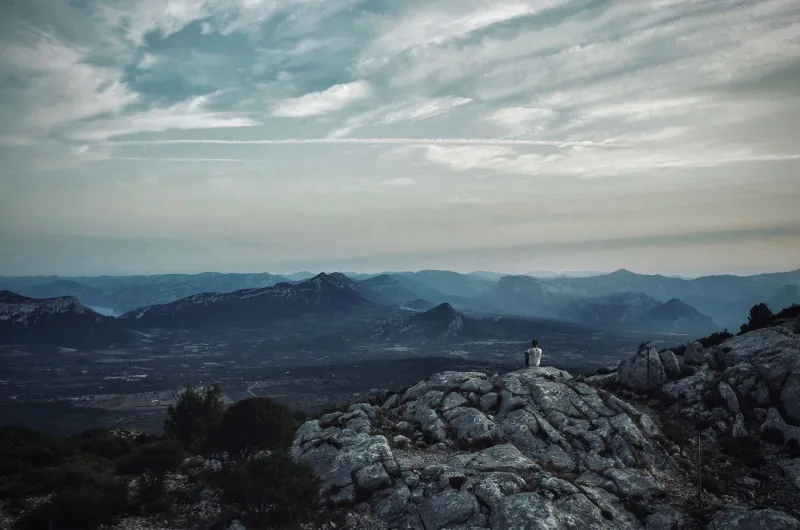
There is a particular kind of loneliness reserved for those who stand at the edge of a glacier, watch the aurora ripple across a winter sky, or listen to a river carve its way through a spruce forest—and still feel, unmistakably, that something is wrong. Not with the view. With them.
Alaska offers scenery that stops the breath. Photographs of its mountains, coastlines, and open tundra circulate endlessly on social media, each one carrying an implicit message: this is where peace lives. This is where a person goes to feel whole. For the many individuals who have moved to Alaska seeking renewal, or who have spent their entire lives here, that cultural narrative can become quietly oppressive when the internal landscape refuses to match the external one.
At Perspective Practice AK, we work with clients who carry a specific and underappreciated form of distress—not just the weight of depression, anxiety, grief, or relational difficulty, but the additional layer of shame that comes from struggling here, in a place so visually extraordinary that suffering can feel almost ungrateful.
The Psychology Behind the Expectation
Human beings are meaning-making creatures. When we are surrounded by something widely regarded as magnificent, the mind naturally constructs a rule: magnificent surroundings should produce magnificent feelings. This is not a logical conclusion so much as an emotional shortcut, one reinforced by culture, travel marketing, and the way people tend to speak about transformative landscapes.
Psychologists refer to a related concept as "place identity"—the way a person's sense of self becomes intertwined with the geographic environment they inhabit. For many Alaskans, the land is not merely a backdrop; it is part of who they are. When internal suffering persists despite that profound connection, the mind may interpret it as a personal failure rather than a natural feature of human complexity.
This misinterpretation matters clinically. Shame does not simply accompany mental health struggles—it actively deepens them. Research consistently shows that shame increases the likelihood of avoidance, isolation, and delayed help-seeking. When a person believes they should feel better because of where they live, they are less likely to reach out for support, and more likely to dismiss their own pain as weakness or ingratitude.
Beauty Does Not Neutralize Pain
It is worth stating plainly: natural environments, no matter how restorative, are not a substitute for mental health care. Nature-based therapies and ecotherapy practices do offer real, evidence-supported benefits—reduced cortisol levels, improved mood, greater present-moment awareness. Alaska's wilderness is, in many respects, a genuinely therapeutic environment. But therapeutic benefit is not the same as cure, and restoration is not the same as resolution.
A person managing the neurological weight of clinical depression will not find their brain chemistry corrected by a view of Denali. Someone processing childhood trauma does not discharge that history by kayaking in Prince William Sound. The individual navigating a deteriorating marriage does not resolve attachment wounds simply because their home sits at the foot of a mountain range. This is not a cynical observation. It is a compassionate one. It releases people from an impossible standard.
Recognizing this distinction also honors the complexity of human suffering. Pain is not a logical response to circumstances alone. It emerges from biology, history, relationship patterns, unmet needs, and neurological processes that operate largely beneath conscious awareness. A breathtaking environment cannot reach those layers any more than a beautiful painting can set a broken bone.
The Compound Weight of "But Look Where You Live"
People who struggle in visually stunning places often encounter a particular social response when they attempt to voice their difficulty. Well-meaning friends, family members, and even acquaintances offer some variation of the phrase: But look where you live. The implication is clear—your surroundings are enviable, therefore your suffering is disproportionate, perhaps even self-indulgent.
This response, however kindly intended, functions as a form of emotional invalidation. It redirects attention away from the person's internal experience and toward an external standard they are presumably failing to appreciate. Over time, repeated exposure to this kind of reaction teaches people to pre-emptively silence themselves. They stop bringing their struggles forward, not because those struggles have resolved, but because they have learned that the landscape will be invoked as evidence against them.
In a state where geographic isolation already limits access to mental health resources, this silencing effect carries serious consequences. Alaska has historically faced significant challenges with suicide rates, substance use, and underutilization of behavioral health services. The shame associated with struggling in a "beautiful place" is not a trivial cultural quirk—it is a barrier to care with measurable human cost.
Holding Both Realities Without Hierarchy
One of the more useful frameworks for addressing this tension comes from dialectical thinking—the capacity to hold two seemingly contradictory truths simultaneously without requiring one to cancel the other. It is entirely possible for a person to love this land deeply and to be in significant emotional pain. It is possible to feel genuine awe at a summer evening in the Kenai Peninsula and to return home to a grief that no sunset has touched.
Neither experience negates the other. The beauty is real. The suffering is also real. Insisting that one must diminish the other creates a false hierarchy that serves no one.
Therapeutic work often involves helping clients develop the capacity to acknowledge both realities with equal validity. This is not a passive acceptance of suffering—it is an active refusal to let shame compound pain. When a person can say, honestly, I live somewhere extraordinary and I am struggling, without immediately following that statement with an apology or a qualification, something important has shifted. They have stopped arguing with their own experience.
Practical Steps Toward Integration
For those navigating this particular tension, several orientations can offer support.
Name the shame explicitly. Identify the specific belief driving the guilt—I should feel better here, or People would trade places with me in a heartbeat. Naming a belief does not automatically dissolve it, but it does interrupt the automatic process by which shame operates beneath conscious awareness.
Separate appreciation from obligation. You can be genuinely grateful for Alaska's landscape without that gratitude requiring you to be emotionally well. Appreciation and suffering are not opposites.
Seek support without justification. You do not need to earn the right to struggle. You do not need to first demonstrate that your circumstances are sufficiently difficult before reaching out to a therapist, counselor, or trusted support person. The presence of a beautiful environment is not a disqualifying condition.
Engage the landscape on its own terms. Rather than approaching nature as a test you are failing, consider engaging it as a companion—something that exists alongside your experience rather than as a measure of it. A walk along the coast does not need to fix anything to be worthwhile.
A Different Kind of Grounding
At Perspective Practice AK, the concept of grounded healing is central to how we approach mental wellness in this state. Grounding, in its truest therapeutic sense, is not about finding a beautiful place to stand. It is about developing an honest, stable relationship with your own inner terrain—one that does not require external conditions to be favorable before it can be trusted.
Alaska's grandeur is a genuine gift. It is also, for many people, an unintentional source of pressure. Releasing that pressure—allowing yourself to be human in a magnificent place rather than made magnificent by it—is not a small thing. It is, in many respects, where real healing begins.