What Alaska Sharpens and What It Splinters: A Honest Look at Relocation and Mental Health
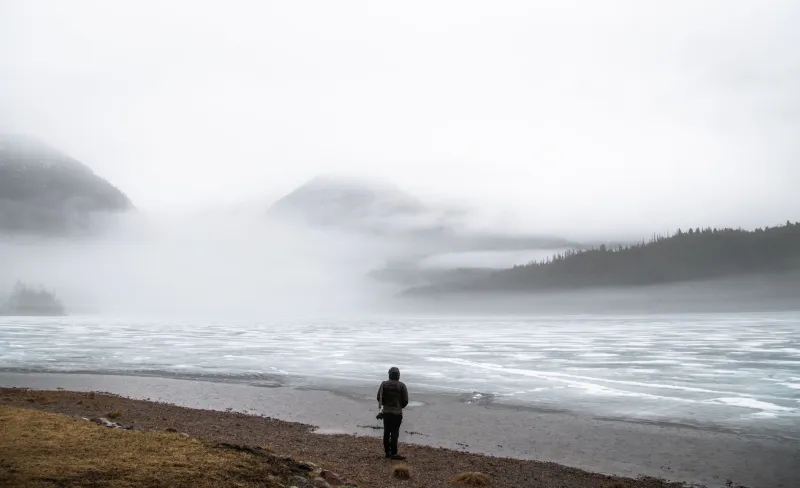
There is a particular kind of hope that arrives in the form of a map. You study the contours of a new place — its coastlines, its mountain ranges, its distance from everything familiar — and you allow yourself to believe that the geography itself might reorganize something inside you. Alaska, more than almost any other destination in the United States, inspires this kind of hope. Its scale is humbling. Its communities are intimate. Its relationship with silence is unlike anything most Americans have ever encountered.
And yet the clinical reality is considerably more nuanced than the hope suggests.
At Perspective Practice AK, we work with individuals who have relocated to Alaska from across the country, and we observe a consistent and counterintuitive pattern: the same environmental qualities that genuinely help some people heal can, for others, accelerate the very struggles they were hoping to leave behind. Understanding which category applies to you is not a matter of optimism or pessimism. It is a matter of honest, informed self-assessment.
The Case for Alaska as a Clarifying Force
Certain mental health challenges do appear to respond positively to the conditions Alaska provides. It is worth naming these directly, because dismissing them entirely would be as dishonest as overstating them.
For individuals who struggle with chronic overstimulation — those whose anxiety is rooted in the relentless pace of urban life, the noise of social media, the pressure of dense professional environments — Alaska's quieter rhythms can provide a genuine neurological reprieve. Research on attention restoration theory suggests that natural environments, particularly vast and minimally structured ones, allow the prefrontal cortex to recover from the sustained directed attention that modern life demands. Alaska offers this in abundance.
Similarly, individuals who have lost a coherent sense of purpose often find that Alaska's practical demands reintroduce one. When you live somewhere that requires you to prepare for winter, maintain equipment, understand weather patterns, and depend on neighbors in tangible ways, the question of meaning becomes less abstract. Daily life provides a framework. For people whose depression has been compounded by purposelessness, this shift can be meaningful — not curative, but genuinely supportive of the therapeutic work.
There is also the matter of community intensity. In smaller Alaskan towns and villages, social bonds tend to be less performative and more functional. People rely on one another. This can be deeply nourishing for individuals who have felt anonymous or socially peripheral in larger cities, and it can accelerate the development of genuine connection — something that is itself a protective factor against a wide range of mental health conditions.
Where the Landscape Becomes a Lens That Magnifies
The same qualities that clarify certain struggles can make others considerably more acute. This is the paradox that deserves careful attention before any relocation decision is made.
Consider isolation. For someone whose primary challenge is anxiety rooted in overstimulation, distance from urban density is a relief. But for someone whose anxiety is fundamentally relational — rooted in fear of abandonment, difficulty trusting others, or a history of attachment disruption — geographic isolation removes the very opportunities for corrective relational experience that healing requires. Therapy can address attachment wounds, but it is most effective when supported by a social environment that offers frequent, low-stakes interpersonal contact. Alaska's remoteness can reduce that contact significantly.
Substance use disorders present a similarly complex picture. Some individuals relocate to Alaska hoping that distance from their previous social environment will support sobriety. In certain cases, a change of environment does disrupt entrenched behavioral patterns long enough to allow new ones to form. However, Alaska also has statistically elevated rates of alcohol use and substance misuse compared to the national average, and smaller communities can mean fewer formal recovery resources. The isolation that feels like a fresh start can, without robust support structures, become a context in which use escalates rather than diminishes.
Perfectionism and high-functioning anxiety — conditions that are often masked by productivity and achievement — can also intensify in Alaska. The state's culture of self-reliance and competence is admirable, but it can reinforce the belief that asking for help is a form of weakness. Individuals who already struggle to acknowledge vulnerability may find that Alaska's cultural norms validate their avoidance rather than challenging it.
A Framework for Honest Self-Assessment
Before making a geographic decision with significant mental health implications, consider working through the following questions — ideally with a therapist or counselor who can help you examine your answers with appropriate depth.
What is the primary source of your current distress? If it is environmental — rooted in the pace, noise, or social pressure of your current location — geographic change may offer genuine relief. If it is relational or internal, the source will travel with you regardless of the map.
How does your mental health respond to reduced social contact? Some people genuinely restore in solitude. Others deteriorate. Be honest about which category describes you, and recognize that Alaska may offer less social contact than you anticipate, particularly in rural areas.
What formal support structures do you require? If your mental health management depends on regular access to specialized care — intensive outpatient programs, psychiatric medication management, peer support groups — research the availability of those resources in your specific destination before committing. Access varies enormously across the state.
Are you moving toward something or away from something? This is perhaps the most important distinction. Relocating because Alaska genuinely aligns with your values, interests, and therapeutic goals is meaningfully different from relocating because you need distance from a situation you have not yet addressed. The latter pattern tends to produce what clinicians sometimes call a "geographic cure" — a temporary reduction in distress followed by the re-emergence of the original difficulty in a new setting.
What is your relationship with discomfort? Alaska will present you with discomfort — physical, social, and existential. If you have some capacity to tolerate and learn from discomfort, the state can function as a powerful growth environment. If your current coping strategies primarily involve avoidance, the additional stressors of Alaskan life may overwhelm your existing resources before new ones can be developed.
The Value of Pre-Relocation Therapeutic Work
At Perspective Practice AK, we often recommend that individuals considering a move to Alaska engage in at least a brief period of focused therapeutic work before relocating — not to delay the move indefinitely, but to enter the transition with greater self-knowledge. Understanding your attachment patterns, your primary coping strategies, and the specific nature of your mental health challenges allows you to make a more informed prediction about how Alaska's particular conditions will interact with your particular psychology.
Geographic change is not inherently therapeutic or harmful. It is a context — one that amplifies certain qualities and mutes others. The question is never whether Alaska will change you. It will. The question is whether those changes will move you in the direction you need to go.
That answer lives not in the landscape, but in the honest work of knowing yourself before you arrive.