When Safe Ground Isn't Enough: The Gap Between Environmental Security and Emotional Healing
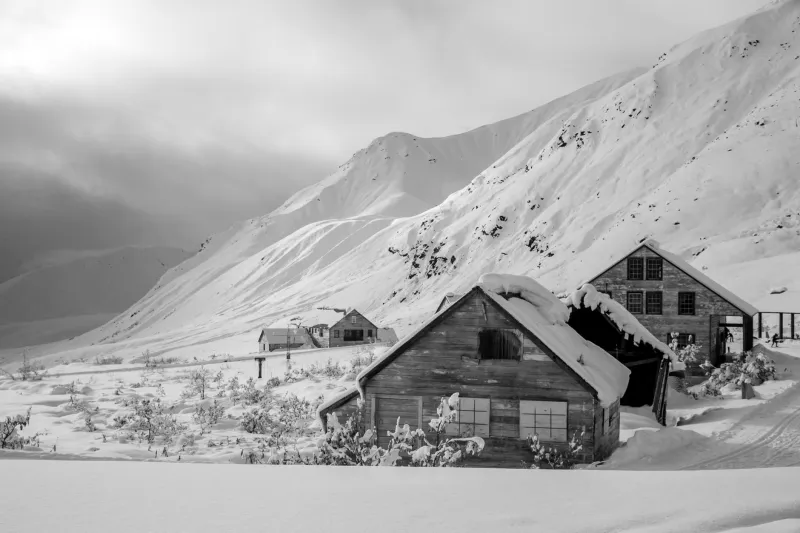
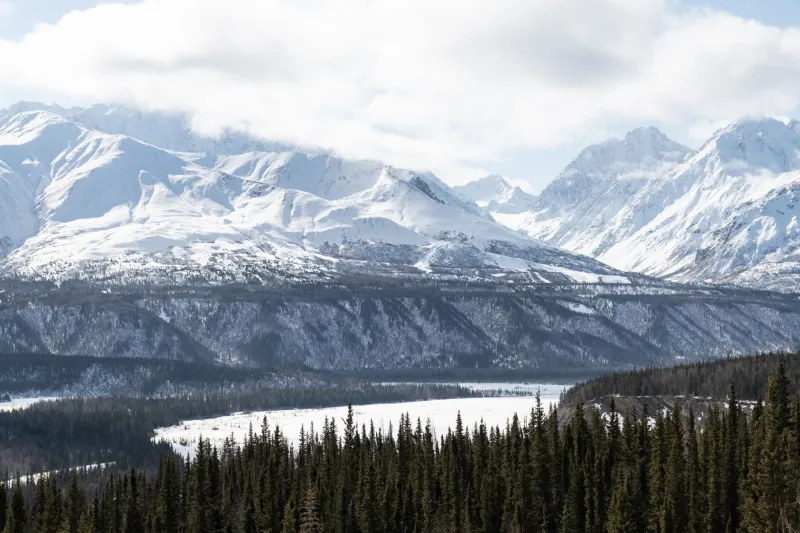
There is something deeply human about the instinct to seek safety by changing your surroundings. When life has been marked by threat—whether through violence, instability, chronic stress, or acute trauma—the mind begins to associate certain environments with danger and imagines that a different place, a calmer place, a safer place, might finally allow it to rest. Alaska, with its small towns, lower crime statistics in many boroughs, and communities built on mutual reliance, draws a meaningful number of people who are chasing exactly that kind of relief.
What they find upon arrival is frequently complicated. The moose are majestic. The neighbors genuinely look out for one another. The pace of daily life slows considerably. And yet, within weeks or months, something familiar resurfaces—an edge of anxiety that doesn't quite fit the surroundings, a hypervigilance that has no obvious target, a flatness of mood that the scenery cannot seem to lift. The external conditions have changed. Something internal has not.
Understanding why this happens—and what to do about it—is not a reason to abandon the move or dismiss its benefits. It is, rather, an invitation to begin the work that geography was never equipped to do on its own.
What the Nervous System Remembers
Trauma is not primarily a cognitive experience. It is a physiological one. When a person endures overwhelming events—or a prolonged accumulation of threatening circumstances—the brain and body develop adaptive responses designed to promote survival. The amygdala becomes sensitized. Cortisol patterns shift. The nervous system recalibrates toward a state of readiness that, in a genuinely dangerous environment, is a tremendous asset.
The difficulty is that these adaptations do not automatically reverse when the danger passes. The nervous system has learned a particular way of operating, and it does not simply reset because you have relocated to a community where the local crime log rarely extends beyond a misplaced snow machine. Your body carries the history of what it has endured, and that history travels with you across state lines, into new time zones, and up into the far north.
This is not a personal failing. It is the predictable result of how human neurobiology responds to sustained or severe threat. Recognizing it as such is the first step toward approaching recovery with appropriate compassion and realistic expectations.
The Particular Appeal of Alaska's Close-Knit Communities
Alaska's smaller communities offer something that is genuinely valuable and genuinely rare in contemporary American life: a culture of interdependence. In villages and small towns across the state, people rely on one another in practical, tangible ways. Neighbors share equipment, assist with subsistence activities, check in during extreme weather, and maintain a quality of social accountability that many urban environments have largely lost.
For someone whose trauma involved betrayal, social isolation, or environments where no one could be trusted, this kind of community can feel almost startlingly healing. And in certain respects, it is. Social connection is one of the most robustly supported protective factors in mental health research. Being embedded in a community that functions with genuine mutual care is not nothing—it is, in fact, meaningful and worth seeking.
The problem arises when that external sense of belonging is mistaken for internal healing. A person can be welcomed into a community, can feel genuinely accepted and valued, and can still carry unresolved trauma that shapes how they interpret interactions, regulate their emotions, and navigate intimacy. Community provides context for healing. It does not, by itself, constitute the healing.
The False Resolution That Safety Can Create
One of the subtler obstacles in trauma recovery is what might be called the illusion of resolution—the sense that because things are better, the underlying wound must have closed. This illusion is particularly powerful in environments that are objectively safer and more supportive than what came before.
When someone moves from a high-crime urban neighborhood, a volatile household, or a deeply stressful work environment to a quiet Alaskan community, the contrast is sharp. Life feels calmer. Sleep may improve initially. The constant low-grade vigilance required by the previous environment is no longer necessary, and its absence can feel like peace.
But this is relief, not recovery. Relief is real and valuable—it creates breathing room that was previously unavailable. However, it can also mask the continued presence of unprocessed trauma, particularly if the individual interprets the reduction in symptoms as evidence that the wound has healed. Months later, when a triggering interaction or a difficult season reactivates familiar patterns, the response can be confusion and discouragement: I thought I had dealt with this. I thought leaving fixed it.
This is precisely the moment when professional support becomes most important—not as an admission of failure, but as an acknowledgment that the work has simply shifted from escaping an unsafe environment to examining what that environment left behind.
What Internal Safety Actually Requires
Genuine emotional safety is not a condition that geography imposes from the outside. It is a capacity that develops from the inside, through deliberate, supported engagement with the experiences and patterns that trauma has created. This work typically involves several interconnected elements.
First, it requires the development of nervous system regulation skills—the ability to recognize when the body is moving into a threat response and to employ practices that help return it to a state of relative calm. Breathwork, somatic awareness, and mindfulness-based approaches are among the evidence-supported tools that support this kind of regulation.
Second, it involves processing the traumatic material itself, typically with the support of a trained therapist. Approaches such as EMDR, trauma-focused cognitive behavioral therapy, and somatic experiencing have demonstrated meaningful effectiveness in helping individuals integrate experiences that the mind has been working hard to avoid.
Third, it requires attention to the relational patterns that trauma has shaped—the ways that past experiences have influenced how a person attaches to others, responds to perceived threat within relationships, and understands their own worthiness of care. These patterns do not dissolve simply because new relationships are available; they must be examined and, over time, renegotiated.
Alaska's communities can support all of this work. The relational richness of a close-knit town, the grounding quality of subsistence activities, the rhythm of seasons that demands presence and adaptation—these are genuine assets in a healing journey. But they function as scaffolding, not as the structure itself.
Moving Toward the Work
If you came to Alaska seeking safety and have found that the peace you hoped for remains elusive, that experience is worth taking seriously rather than dismissing. It is not evidence that the move was wrong or that healing is beyond reach. It is, more accurately, a signal that the healing you need is of a kind that requires direct engagement rather than environmental change.
At Perspective Practice AK, we work with individuals who are navigating exactly this terrain—people who have made courageous decisions to seek better circumstances and who are now ready to turn toward the internal work that those circumstances cannot do for them. The Alaskan landscape has much to offer the healing process. So does the willingness to look honestly at what you carry.
Safe ground is a beginning. The work that happens on it is where recovery lives.