Heading North: How Relocating to Alaska Can Reshape Your Mental and Emotional Landscape

There is something quietly compelling about the notion of starting over somewhere vast and unhurried. For a growing number of Americans, that somewhere is Alaska. Whether driven by burnout, a longing for community, or a desire to reconnect with purposeful living, people are increasingly looking northward—not as an escape, but as a deliberate act of self-reinvention. At Perspective Practice AK, we work with individuals navigating exactly this kind of transition, and what we observe consistently is that the decision to relocate to Alaska is rarely just logistical. It is, at its core, a psychological one.
The Psychological Pull of the Last Frontier
Psychologists have long studied the relationship between environment and mental well-being. Research into what is sometimes called "restorative environments" suggests that natural settings—particularly those characterized by open space, reduced noise, and minimal visual clutter—can meaningfully lower stress hormones, improve attentional capacity, and foster a sense of calm that urban environments rarely sustain.
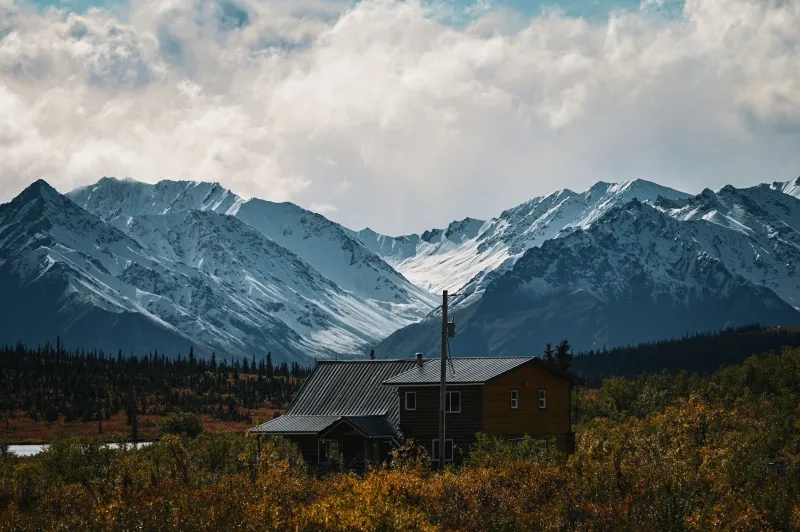
Alaska offers these qualities in abundance. The sheer scale of the landscape—its glaciers, tidal flats, boreal forests, and mountain ranges—creates what many residents describe as a recalibration of perspective. Problems that once felt consuming can appear more manageable when measured against terrain that has existed for millennia. This is not wishful thinking; it reflects well-documented psychological mechanisms related to awe, a positive emotional state that research associates with reduced self-focus and increased prosocial behavior.
Beyond the landscape itself, Alaska's pace of life is markedly different from that of most American cities. The relentless productivity culture that dominates metropolitan areas loses much of its grip here. Subsistence practices, seasonal rhythms, and geographic realities all conspire to slow things down in ways that many newcomers find initially disorienting—and then profoundly relieving.
Meaningful Work and the Search for Purpose
One of the most consistent themes among individuals who relocate to Alaska is the discovery of work that feels genuinely purposeful. Whether that means commercial fishing, healthcare in a rural community, conservation work, or building a homestead, Alaska tends to reward practical competence and self-reliance in ways that carry real psychological weight.
Psychologist Martin Seligman's model of well-being identifies "engagement" and "meaning" as two of its five core pillars. When individuals describe what changes most profoundly after moving north, they often speak in exactly these terms—of feeling present in their labor, of understanding why their contributions matter. In a cultural moment when many Americans report feeling disconnected from the value of their daily work, this kind of grounded engagement can be genuinely transformative.
For those considering a seasonal relocation—working a summer season in a fishing community or taking a contract position in a remote area—the same dynamics often apply, even within a compressed timeframe. A summer in Alaska can offer a psychological reset that months of urban self-improvement efforts sometimes fail to provide.
Community, Intimacy, and the Antidote to Loneliness
The United States is, by most measures, in the midst of a loneliness epidemic. Despite—or perhaps because of—unprecedented digital connectivity, rates of social isolation and reported loneliness have climbed steadily over the past two decades. Small Alaskan communities, by contrast, tend to operate with a degree of interpersonal accountability and mutual reliance that larger cities struggle to replicate.
When your nearest neighbor is twenty miles away, or when the entire town gathers at the same community hall for winter events, relationships take on a different texture. They become less optional. There is a kind of social health that emerges from genuine interdependence—knowing that your neighbors will show up when your generator fails, and that you will do the same for them. This reciprocal fabric of care is something that many relocators identify as the most unexpectedly nourishing aspect of Alaskan life.
Confronting the Realistic Challenges
Honesty requires acknowledging what a move to Alaska demands as well as what it offers. The winters are long, dark, and isolating in ways that can intensify pre-existing mental health vulnerabilities. Seasonal Affective Disorder is more prevalent in Alaska than in most of the lower 48 states, and individuals with a history of depression or anxiety should approach a relocation with appropriate clinical support rather than the assumption that geography alone will resolve internal struggles.
Access to mental health services can also be limited, particularly in rural areas. Telehealth has expanded options considerably, and practices like Perspective Practice AK are designed to serve Alaskans wherever they are located—but the reality of reduced in-person clinical resources is worth factoring into any decision.
Financial pressures are another consideration. The cost of living in many Alaskan communities is substantially higher than the national average, and the emotional strain of economic instability can undermine the very wellness gains that the move was intended to produce.
Determining Whether Alaska Aligns With Your Wellness Goals
A relocation to Alaska is most likely to support mental health when it is undertaken with clarity of intention rather than urgency of escape. Individuals who move north to flee circumstances—a difficult relationship, a career they resent, a city that overwhelms them—sometimes find that unresolved internal patterns follow them regardless of longitude.
The most productive frame for considering an Alaskan move is one of addition rather than subtraction: What specific qualities of life do you hope to cultivate? How does Alaska's particular character align with those qualities? And what therapeutic or clinical support might help you navigate the transition thoughtfully?
At Perspective Practice AK, we often work with clients in the exploratory phase of this decision—helping them distinguish between a genuine call toward something new and an impulse to avoid something difficult. Both are valid human experiences, but they call for different responses.
Alaska does not fix what is broken. What it can do, for the right person at the right moment, is offer a context in which healing becomes more possible—a landscape expansive enough to hold the full weight of transformation.