Solitude as Sanctuary: Finding Mental Wellness in Alaska's Remote Communities
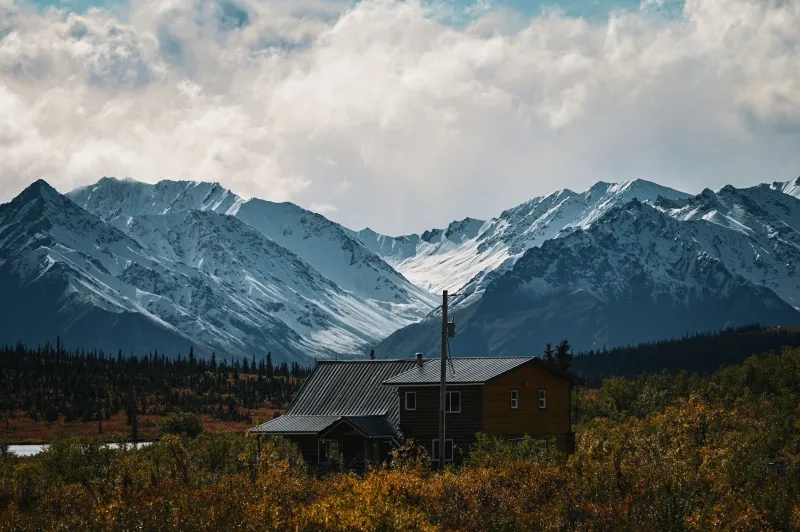
When most Americans picture mental health risk factors, they envision crowded cities, relentless digital noise, and the exhausting pace of modern life. What they rarely picture is a small community of two hundred people accessible only by floatplane, surrounded by spruce forest and silence. Yet for hundreds of thousands of Alaskans, that is precisely the landscape of daily existence. And while the clinical literature has long catalogued the psychological burdens of rural isolation—limited access to care, social scarcity, economic precarity—a growing body of thought suggests that the very conditions defining remote Alaskan life may also carry remarkable therapeutic potential.
At Perspective Practice AK, we work with clients who span the full geographic breadth of this state. What we observe again and again is that the relationship between isolation and mental wellness is far more nuanced than a simple equation of "remote equals at risk." The goal of this article is not to minimize real difficulties, but to offer a more complete picture—one that honors both the challenges and the unexpected gifts of life at the edge of the accessible world.
The Psychological Cost of Constant Comparison
Urban and suburban American life is saturated with social comparison. Instagram feeds, neighborhood aesthetics, career benchmarks, and consumer culture conspire to generate a continuous low-grade anxiety about whether one is measuring up. Psychologists refer to this as social comparison theory, and decades of research confirm that frequent upward comparison—evaluating oneself against those who appear more successful, attractive, or accomplished—is strongly associated with diminished self-esteem, increased anxiety, and depressive symptoms.
Remote Alaskan communities, by their very structure, reduce the density of these comparisons. When your nearest neighbor is twelve miles down a gravel road, the pressure to keep up with anyone dissolves considerably. The metrics of success shift: Can you keep the generator running through January? Did the smokehouse yield enough salmon? These are questions grounded in genuine competence and survival, not in the performance of status. For many individuals who relocate from urban environments, this shift in social architecture produces a striking and rapid improvement in self-perception and emotional baseline.
Distance as a Clarifying Force
There is a reason that contemplative traditions across cultures have long associated the wilderness with spiritual and psychological clarity. Distance from ordinary social life creates conditions for introspection that are genuinely difficult to manufacture in denser environments. When the external stimuli are reduced—fewer advertisements, fewer social obligations, fewer interruptions—the internal landscape becomes more audible.
This is not mere romanticism. Neuroscientific research on attention restoration theory, developed by Rachel and Stephen Kaplan, demonstrates that natural environments reduce cognitive fatigue and restore the capacity for directed attention. The vast, unhurried character of the Alaskan backcountry provides what researchers call "soft fascination"—an effortless engagement that allows the prefrontal cortex to rest and recover. For individuals managing anxiety, burnout, or trauma, this restorative quality can function as a form of passive therapy that complements formal treatment.
At Perspective Practice AK, we often encourage clients in remote settings to recognize this quality of their environment as a resource rather than a backdrop. Intentional time outdoors—even a daily walk in conditions that many would find forbidding—can serve as a meaningful component of a broader wellness practice.
The Paradox of Tight-Knit Communities
Isolation does not necessarily mean loneliness, and the distinction matters enormously for mental health. In many remote Alaskan communities, geographical distance from the broader world produces a corresponding intensification of local bonds. Neighbors become essential to one another in practical, immediate ways that suburban relationships rarely require. You borrow the snowmachine to get to the clinic. You bring a moose quarter to the family that lost their breadwinner. You sit with the elder who hasn't left her house since the last storm.
These interdependencies create what sociologists call high social capital—the dense network of trust, reciprocity, and mutual obligation that characterizes cohesive communities. High social capital is one of the most robust protective factors in mental health research, associated with lower rates of depression, greater resilience following adversity, and longer life expectancy. The enforced intimacy of remote living, while occasionally fraught, can cultivate exactly this kind of capital.
Of course, small communities also carry their own tensions. Limited privacy, the weight of collective memory, and the absence of anonymity can be psychologically burdensome—particularly for individuals navigating stigmatized experiences such as addiction, domestic difficulty, or mental illness. Acknowledging these pressures is essential to an honest account of remote life.
Practical Strategies for Thriving in Remote Settings
Reframing isolation as opportunity does not require ignoring its difficulties. Rather, it involves developing intentional practices that leverage the advantages while mitigating the risks. The following strategies are ones we frequently discuss with clients at Perspective Practice AK.
Establish a structured daily rhythm. The absence of external scheduling that characterizes urban life can be liberating, but it can also erode motivation and mood. A consistent routine—regular sleep and wake times, designated periods for work, outdoor activity, and social connection—provides the psychological scaffolding that supports emotional stability.
Invest in digital connection thoughtfully. Telehealth and video communication have transformed the accessibility of mental health services for remote Alaskans. Using these tools deliberately—scheduling regular sessions with a therapist, maintaining relationships with distant family, participating in online communities of interest—can address the genuine relational scarcity that isolation sometimes produces without reintroducing the comparison-driven anxiety of passive social media consumption.
Cultivate a relationship with the land. Whether through gardening, foraging, hiking, or simply observing seasonal change, developing an active, attentive relationship with the natural environment amplifies the restorative benefits that proximity to nature provides. This is not incidental to wellness in Alaska; it is central to it.
Seek community roles with purpose. Volunteering for the local fire department, participating in village council, or mentoring younger community members generates a sense of meaning and belonging that is profoundly protective for mental health. In small communities, these opportunities are often more accessible and more impactful than their urban equivalents.
Maintain access to professional support. The availability of telehealth services means that geographic distance no longer needs to be a barrier to quality mental health care. Establishing a relationship with a therapist or counselor before a crisis emerges—rather than in response to one—is among the most effective preventive measures available.
A Different Kind of Richness
The prevailing narrative around remote Alaskan life tends to emphasize what it lacks: hospitals, highways, variety, convenience. What this framing misses is what it contains—stillness, authenticity, necessity, and the particular kind of clarity that arrives when the noise of modern life falls away.
This is not an argument that remote living is universally beneficial, or that the very real access challenges facing rural Alaskans should be minimized. It is, rather, an invitation to hold a fuller picture. At Perspective Practice AK, we believe that the landscape and conditions of Alaska are not merely a backdrop to the therapeutic work we do—they are active participants in it. The wilderness does not simply surround our clients; it shapes them, challenges them, and, when approached with intention, heals them.
For those navigating the particular terrain of remote Alaskan life, the question worth asking is not only "what does this place cost me?" but also "what does this place make possible?" The answer, more often than not, is more than one might expect.