Packed Bags, Same Mind: Why Relocating to Alaska Cannot Outrun Your Anxiety
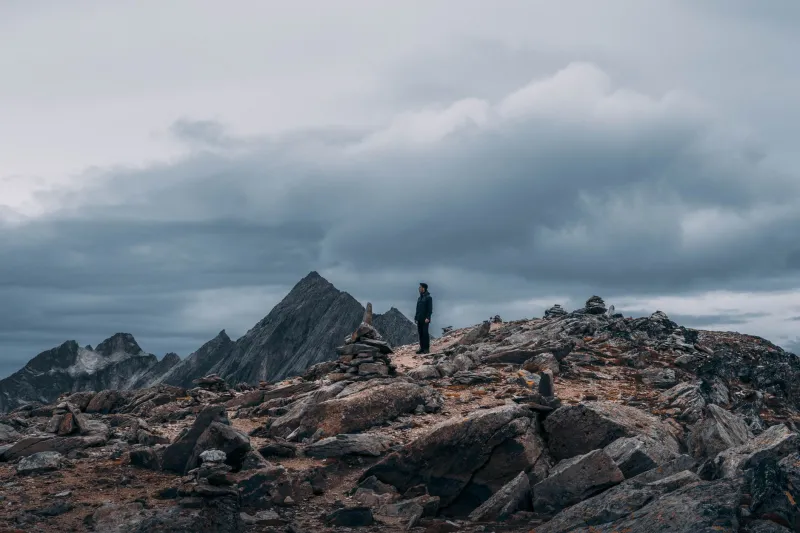
The fantasy is remarkably consistent. A person stands somewhere crowded—a Chicago apartment, a Phoenix suburb, a mid-sized city that stopped feeling like home years ago—and imagines Alaska. They imagine the silence, the scale, the apparent absence of everything that has been grinding them down. They tell themselves, with genuine conviction, that a different geography will produce a different inner life.
That conviction is understandable. It is also, clinically speaking, almost entirely mistaken.
Mental health professionals working in Alaska encounter a particular kind of client with notable regularity: the person who arrived seeking relief and found, to their considerable dismay, that they brought everything with them. The anxiety that saturated their mornings in Seattle is still present at dawn in Fairbanks. The low-grade dread that trailed them through their workdays in Atlanta has simply transferred to a new backdrop. The mountains are real. The transformation, without deliberate psychological work, is not.
What Clinicians Call Geographic Arbitrage
The term "geographic cure" has circulated in addiction recovery communities for decades, describing the mistaken belief that changing one's location will resolve the underlying conditions driving destructive behavior. Mental health professionals have increasingly recognized that the same logic applies far beyond substance use. Anxiety, depression, unresolved trauma, and entrenched relational patterns do not respond to latitude changes.
Some clinicians refer to the broader phenomenon as geographic arbitrage applied to mental health—the psychological equivalent of expecting a financial windfall to resolve spending habits that were never examined. The external variable changes dramatically. The internal architecture does not.
This matters in the Alaskan context because the state occupies a uniquely powerful position in the American cultural imagination. It represents, for many people, the most extreme version of the fresh start. If you cannot reset your life in Alaska, the thinking goes, you cannot reset it anywhere. That grandiosity, while culturally interesting, raises the psychological stakes considerably. When the inevitable realization arrives—that the anxiety followed you north—the disappointment can be severe enough to compound the original struggle.
The Neuroscience Behind the Illusion
Anxiety is not a response to place. It is a pattern of nervous system activation, cognitive interpretation, and behavioral habit that becomes encoded over time. The brain does not update those patterns simply because the view outside the window has changed. What it does, with remarkable efficiency, is apply existing patterns to new circumstances.
A person whose anxiety was organized around social evaluation in a dense urban environment will find new material for that same anxiety in a small Alaskan community—where, in many cases, social visibility is even more acute and the consequences of perceived judgment feel more immediate. A person whose anxiety was rooted in uncertainty about the future will find Alaska's economic volatility, seasonal extremes, and logistical complexity to be fertile ground for the same rumination that plagued them elsewhere.
The nervous system is not fooled by scenery. It is, however, genuinely responsive to consistent, targeted therapeutic intervention—the kind that addresses the underlying patterns rather than the surface conditions.
What Alaskans Who Relocated Actually Report
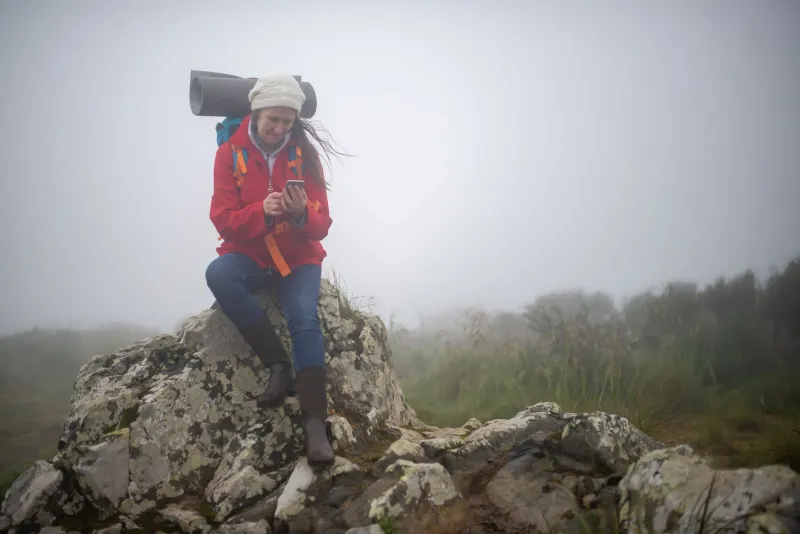
Conversations with individuals who moved to Alaska specifically seeking psychological relief reveal a common arc. The first weeks or months often produce what functions as a genuine respite—the demands of settling into a new environment, the novelty of the landscape, and the logistical preoccupations of relocation temporarily crowd out familiar anxious patterns. Some people interpret this period as evidence that the move worked.
Then the novelty attenuates. The logistics resolve. The environment becomes familiar. And the internal weather, which was never altered, reasserts itself.
Many of these individuals describe a specific quality of disorientation at this stage. They have, in some cases, left behind professional networks, family support systems, and established therapeutic relationships. They are now managing the same anxiety in a place where mental health resources may be geographically distant, where the cultural premium on self-sufficiency can make help-seeking feel like a form of failure, and where the isolation that once seemed appealing has become an additional stressor.
The move, in other words, did not reduce the burden. In some respects, it increased it.
The Compounding Effect of Alaskan Isolation
Alaska's remoteness is not incidental to this conversation. It is central to it. For individuals managing anxiety without adequate support structures, geographic isolation can function as an amplifier rather than a buffer. The distance from mental health services—whether measured in miles, hours of travel, or simple scarcity of providers—means that the window between recognizing a need and accessing care is substantially wider than it would be in most continental US settings.
Furthermore, the cultural context matters. Alaska has a deep and legitimate tradition of resilience and self-reliance that serves its residents well in many domains. That same tradition, however, can make it genuinely difficult for people to acknowledge that they are struggling, to seek professional support, or to admit that the move they made with such hope has not produced the relief they expected. Shame compounds anxiety. Isolation compounds shame. The cycle is not unique to Alaska, but the conditions here can accelerate it.
What Actually Produces Lasting Change
This is not an argument against moving to Alaska. It is an argument against expecting the move to do psychological work that only deliberate intervention can accomplish.
The therapeutic literature on anxiety is consistent on this point: lasting relief comes from addressing the cognitive, emotional, and behavioral patterns that generate and sustain anxious experience. That work—whether it takes the form of cognitive-behavioral therapy, acceptance and commitment therapy, somatic approaches, or other evidence-based modalities—is location-independent. It can be done in Alaska. It cannot be replaced by Alaska.
For individuals who have relocated to Alaska and found that their anxiety persisted or intensified, that recognition is not a verdict on the move. It is an invitation to engage more directly with what was always the actual source of the difficulty. The landscape can support that process. It cannot substitute for it.
For those still in the planning stage—still standing in that Chicago apartment or Phoenix suburb, constructing the fantasy of the northern fresh start—the most useful reframe may be this: bring the intention you are directing toward the move and direct it instead toward understanding what you are carrying. The work that needs to happen is interior. Alaska will still be there when you are ready to arrive as someone who has begun that work, rather than someone fleeing from the necessity of it.
A Note on Seeking Support in Alaska
If you are living in Alaska and finding that anxiety, depression, or unresolved distress is affecting your daily life, professional support is available—including through telehealth platforms that significantly reduce the barrier imposed by geographic distance. Reaching out is not a concession to weakness. It is the most pragmatic decision available to someone who has discovered, as so many do, that the landscape alone was not enough.
At Perspective Practice AK, we work with individuals across Alaska's communities to address the full complexity of what they carry—not just the circumstances they inhabit. The terrain here is extraordinary. The healing work, though, happens within.