Rooted in the Land: Seven Traditional Alaskan Practices That Strengthen Mental Resilience
Therapeutic modalities come in many forms. There is the structured environment of a clinical office, the guided conversation of a skilled counselor, and the evidence-based protocols of cognitive behavioral therapy. But there is also the smokehouse in September, the net pulled from cold water before dawn, and the quiet discipline of splitting wood for a winter that will arrive whether you are ready or not.
At Perspective Practice AK, we recognize that healing does not occur exclusively in formal settings. For many Alaskans, the most potent sources of psychological grounding and emotional regulation are found not in textbooks but in the land-based practices that have defined life in this region for generations. What follows is an exploration of seven such practices—rooted in traditional Alaskan culture—and the specific therapeutic mechanisms that make each one valuable for mental wellness.
1. Subsistence Fishing: The Meditative Power of Patient Attention
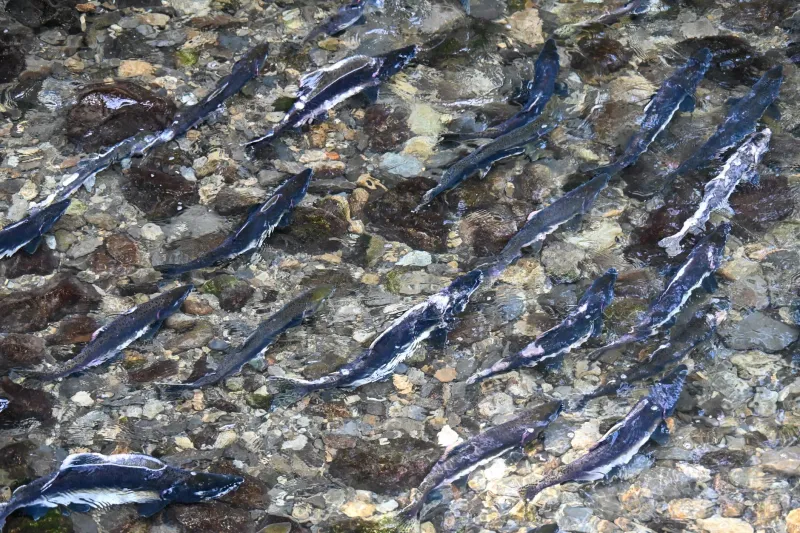
Commercial fishing is an industry. Subsistence fishing is something closer to a practice. The hours spent on a riverbank or in a small boat, reading the water, monitoring the line, and waiting with disciplined patience constitute a form of mindfulness that rivals any formal meditation protocol.
Research on mindfulness-based interventions consistently demonstrates their effectiveness in reducing anxiety, improving emotional regulation, and decreasing rumination. The mechanism is straightforward: sustained, non-judgmental attention to the present moment interrupts the cycles of worry and self-criticism that characterize many anxiety and depressive disorders. Subsistence fishing demands precisely this quality of attention. The fish do not care about your mortgage, your diagnosis, or your relationship difficulties. The river exists entirely in the present tense, and to fish it well, you must exist there too.
For clients at Perspective Practice AK who struggle with intrusive thoughts or chronic anxiety, we frequently discuss the therapeutic value of activities that require this kind of absorbed, present-moment focus. Fishing is one of the most culturally accessible versions of this practice in Alaska.
2. Hunting: Purposeful Movement and the Psychology of Preparedness
The preparation for a hunt—scouting terrain, maintaining equipment, studying animal behavior, coordinating with others—engages the planning and problem-solving capacities of the prefrontal cortex in ways that are deeply satisfying. Psychologists who study motivation identify mastery and competence as fundamental human needs; meeting those needs through skilled, purposeful activity generates the kind of sustained well-being that passive entertainment cannot replicate.
The physical dimension matters equally. Hunting typically involves substantial movement across challenging terrain, which activates the body's endorphin and serotonin systems in ways that meaningfully reduce depressive symptoms. The harvest itself—the moment of genuine accomplishment after sustained effort—produces a neurological reward response that reinforces purpose, capability, and self-efficacy.
Furthermore, hunting in Alaska is rarely a solitary endeavor. The social coordination it requires strengthens community bonds and generates shared narrative—both of which are significant protective factors for mental health.
3. Homesteading and Seasonal Preparation: Structure as a Foundation for Stability
The rhythmic demands of homestead life—preparing before winter, maintaining systems through it, and recovering and rebuilding in spring—impose a natural structure on daily existence that carries significant psychological benefit. Depression and anxiety frequently erode the capacity for self-directed routine, creating a feedback loop in which disorganization deepens distress. The external demands of homesteading interrupt this loop by providing non-negotiable tasks that must be completed regardless of internal state.
Behavioral activation, a core component of cognitive behavioral therapy, operates on exactly this principle: engagement with meaningful, structured activity precedes motivational recovery, not the other way around. The homestead does not wait for you to feel motivated. In this sense, its demands are therapeutically structured in a way that few modern environments replicate.
4. Food Preservation: The Therapeutic Rhythm of Repetitive, Skilled Work
Canning salmon. Rendering fat. Drying berries. Fermenting fish heads in the traditional Yup'ik fashion. These are not merely practical tasks—they are meditative processes that engage the hands, quiet the analytical mind, and produce something tangible and nourishing.
Occupational therapists have long recognized the value of repetitive, skilled handwork for emotional regulation. The rhythm of canning—the precise sequencing, the sensory engagement, the visible accumulation of completed jars—activates what psychologists call a "flow state," characterized by effortless concentration and a temporary suspension of self-referential thought. Flow states are associated with elevated mood, reduced stress hormones, and increased sense of meaning.
There is also something specifically grounding about producing food. In a culture that has largely abstracted the relationship between labor and sustenance, the act of transforming raw fish or foraged berries into preserved food for winter restores a sense of agency and sufficiency that many modern people find they have been quietly missing.
5. Traditional Craftsmanship: Identity, Legacy, and Intergenerational Connection
The creation of traditional Alaskan objects—skin-sewn boots, bentwood bowls, carved masks, woven grass baskets—involves far more than manual skill. It is an act of cultural continuity, a conversation across generations, and a form of identity affirmation that carries particular psychological weight for Alaska Native individuals navigating the complex terrain between traditional and contemporary life.
Research on cultural identity and mental health consistently finds that strong identification with one's cultural heritage is a protective factor against depression, substance use, and suicide—outcomes that disproportionately affect Alaska Native communities. Engaging in traditional craftsmanship is one of the most direct and embodied ways to strengthen this connection. It is also, for practitioners of all backgrounds, a form of creative expression that supports emotional processing and self-understanding.
6. Seasonal Living: Accepting What Cannot Be Controlled
Alaska's seasons are not suggestions. They are facts of extraordinary consequence, and living well within them requires a psychological orientation that clinical practitioners would recognize as radical acceptance—the therapeutic practice of acknowledging reality as it is rather than as one wishes it to be.
The individual who rages against the darkness of January, who resents the mud of breakup season, or who refuses to prepare adequately for winter because preparation feels like defeat, is not merely inconvenienced. They are in a state of chronic psychological friction that generates genuine suffering. Conversely, the person who has internalized the rhythm of the seasons—who rests more deeply in winter, who works with particular intensity during the long days of summer, who greets each transition as a natural and expected part of the cycle—has cultivated a form of equanimity that is both practically adaptive and emotionally sustaining.
At Perspective Practice AK, we often draw on the concept of seasonal living when working with clients who struggle with the need for control. Alaska's climate is an exceptionally effective teacher of acceptance.
7. Community Gathering and Oral Tradition: The Healing Function of Shared Story
Potlatches, community feasts, storytelling circles, and the informal gatherings that have always characterized Alaskan village life serve functions that modern psychology is only beginning to formalize. Narrative therapy, a well-established clinical approach, holds that the stories we tell about our lives shape our psychological experience of them. Communities that maintain strong oral traditions provide their members with a rich repertoire of shared stories—accounts of survival, ingenuity, loss, and renewal—that contextualize individual suffering within a larger human frame.
To hear that one's great-grandmother survived a winter that killed half the village, or that one's community endured and rebuilt after catastrophic flood, is not merely historical information. It is a transmission of resilience—a message, carried through story, that difficulty is survivable and that the community persists.
Bringing the Land Into the Healing Process
The practices described above are not alternatives to professional mental health care. They are complements to it—powerful, culturally grounded resources that can amplify the work done in formal therapeutic settings. At Perspective Practice AK, we are committed to honoring the full breadth of what supports wellness in this place, including the wisdom embedded in the land-based traditions that have sustained Alaskan communities through conditions that would challenge the hardiest of spirits.
If you are curious about how traditional practices might be integrated into your own wellness journey, we invite you to reach out. The path to healing, in Alaska as anywhere, is rarely a single road. More often, it is a network of trails—some of them very old.