The Quiet That Teaches: Embracing Boredom as a Path to Self-Discovery in Remote Alaska
When There Is Nothing to Do
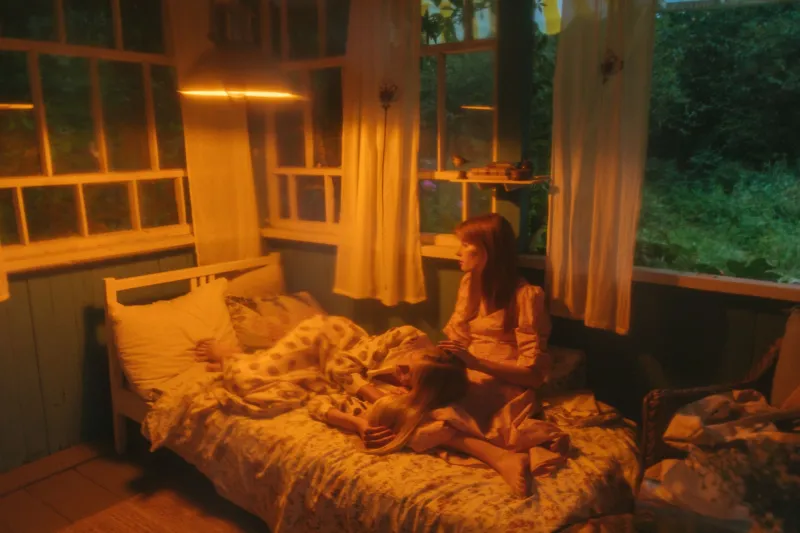
Imagine an evening with no streaming queue, no restaurant to visit, no social event to attend. The nearest movie theater is two hours away. The phone signal is unreliable. The roads outside are dark and empty, and the wind is doing what Alaska wind does in November.
For someone newly arrived from a major American city, this scenario can feel like a kind of punishment. For a long-term resident of a small Alaskan town, it may simply be a Tuesday.
Boredom, in the conventional sense, is the experience of having nothing sufficiently stimulating to occupy the mind. In contemporary culture, it has been treated as a problem to be eliminated—a gap to be filled by technology, social media, entertainment, or productivity. The average American adult now spends more than eleven hours per day interacting with media in some form. The idea that emptiness could be useful, even healing, runs directly against that current.
And yet, a growing body of psychological research—alongside centuries of contemplative tradition—suggests that the discomfort of understimulation, when met with curiosity rather than avoidance, can become a doorway to genuine self-knowledge.
What Boredom Actually Is
Psychologists who study boredom describe it not simply as the absence of stimulation, but as a state of frustrated desire for engagement. The mind wants to be occupied; when it cannot find suitable occupation, it becomes restless. That restlessness, however, is not meaningless noise. It is information.
Researchers including Sandi Mann and Rebekah Cadman at the University of Central Lancashire have found that participants who were deliberately bored before a creative task consistently outperformed those who were not. The hypothesis is that boredom activates mind-wandering, and mind-wandering—the spontaneous, associative movement of thought—is closely linked to creativity, problem-solving, and self-referential processing.
In simpler terms: when the mind is not given something to do, it begins to work on itself.
This is precisely what can happen in remote Alaskan communities, where the infrastructure of constant distraction is simply not available. The question is whether residents will treat that condition as a deficit to be overcome, or as an invitation to be accepted.
The Fear Underneath the Restlessness
For many people, the discomfort of boredom is not merely the discomfort of having nothing to do. It is the discomfort of being alone with themselves—and with whatever thoughts, feelings, and memories surface in the absence of external noise.
This is worth naming directly, because it is clinically significant. Many individuals who describe themselves as easily bored, or who feel compelled to fill every moment with stimulation, are not simply seeking entertainment. They are, often without full awareness, avoiding internal experiences that feel threatening: grief that has not been processed, anxiety that has not been examined, questions about identity or purpose that have not been answered.
In this light, the compulsive reaching for a phone, for a podcast, for any form of distraction, is a coping mechanism. It is not a character flaw. But it is worth understanding as such, because coping mechanisms that function to suppress awareness also function to prevent growth.
Alaska's quieter communities, by limiting the availability of these escapes, can inadvertently create the conditions that make genuine introspection more likely—if residents are willing to stay with the discomfort long enough to discover what it contains.
Reframing Stillness as Practice
The shift from experiencing boredom as deprivation to experiencing it as practice is not automatic. It requires intention and, often, some practical scaffolding. Several approaches have shown promise both in clinical settings and in the broader literature on contemplative practice:
Scheduled unstructured time. Rather than waiting for boredom to arrive and then reacting to it with anxiety or avoidance, deliberately building periods of unscheduled time into the day normalizes the experience. Starting with fifteen to twenty minutes and gradually extending the duration can help the nervous system acclimate to stillness without it feeling like a threat.
Journaling as a bridge. For individuals who find the silence of an unstimulated mind disorienting, writing can serve as a transitional tool. The act of putting words to whatever arises—without agenda, without editing—externalizes internal experience and makes it easier to observe. Over time, this practice can build the capacity to simply sit with thoughts without needing to capture or resolve them.
Curiosity as a stance. The difference between boredom as suffering and boredom as inquiry often comes down to orientation. Approaching restlessness with the question "what is this telling me?" rather than "how do I make this stop?" transforms the experience from something to endure into something to explore.
Physical engagement with the environment. Alaska's landscape offers a particular resource here. Walking, particularly in natural settings, has been shown to support the kind of diffuse, associative thinking that boredom also promotes. A slow walk through a familiar trail in a small Alaskan town—without earbuds, without a destination—can produce the same introspective conditions as formal meditation for many individuals.
What Emerges in the Quiet
Those who have spent extended time in remote communities often describe a particular quality of attention that develops over months and years—a capacity to notice what they feel, to sit with ambiguity, to make decisions from a more grounded place. This is not romanticization. It is a recognizable developmental outcome that aligns with what psychologists call increased self-awareness and emotional regulation.
When the mind is not perpetually occupied by external demands, it begins to surface material that has been deferred. Old questions return. Unfinished emotional business presents itself. Desires that were buried beneath busyness become legible again. This can be uncomfortable. It can also be extraordinarily clarifying.
For individuals in therapeutic work, this process can accelerate meaningfully. Clients who have reduced their consumption of constant media and stimulation often report that they arrive at sessions with more access to their inner lives—more ability to identify what they actually feel, rather than what they think they should feel.
Alaska's Quiet as a Clinical Asset
At Perspective Practice AK, we work with clients across Alaska's varied communities—from Anchorage's relative urban density to the far quieter rhythms of smaller towns and villages. One of the patterns we observe consistently is that clients who learn to work with Alaska's pace, rather than against it, often make faster and more durable progress in their therapeutic goals.
The stillness is not the obstacle. In many cases, it is the medium.
If you are living in a quieter corner of this state and finding the lack of stimulation difficult to bear, we would invite you to consider a reframe: what if the discomfort you are feeling is not a sign that something is wrong with your environment, but rather a signal that something important is ready to be heard?
The quiet, when approached with patience and a degree of courage, tends to be quite generous with what it offers in return.