When Daylight Becomes Disruptive: Managing Sleep and Circadian Health During Alaska's Midnight Sun
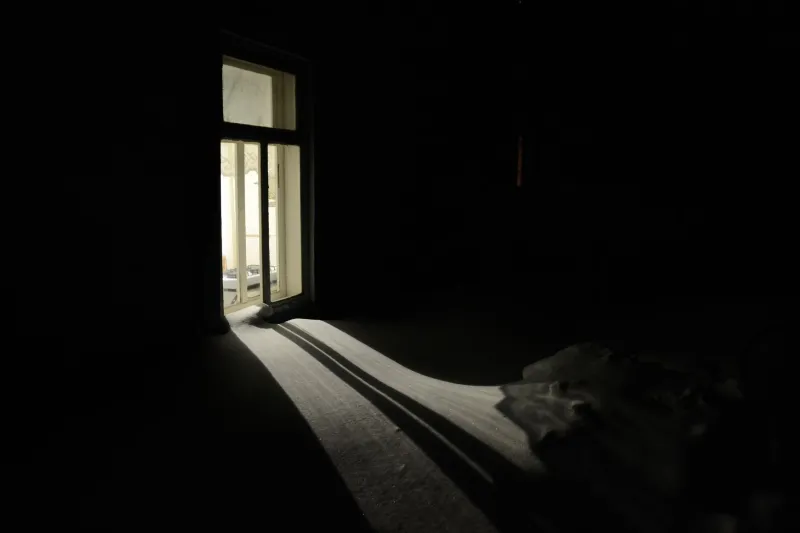
Most conversations about Alaska's relationship with light focus on the darkness — the long winters, the abbreviated days, the well-documented effects of reduced sunlight on mood and cognition. That conversation is important and necessary. But there is a counterpart phenomenon that receives comparatively little clinical attention: the profound disruption that extended summer daylight inflicts on sleep, mental health, and daily functioning for residents and visitors alike.
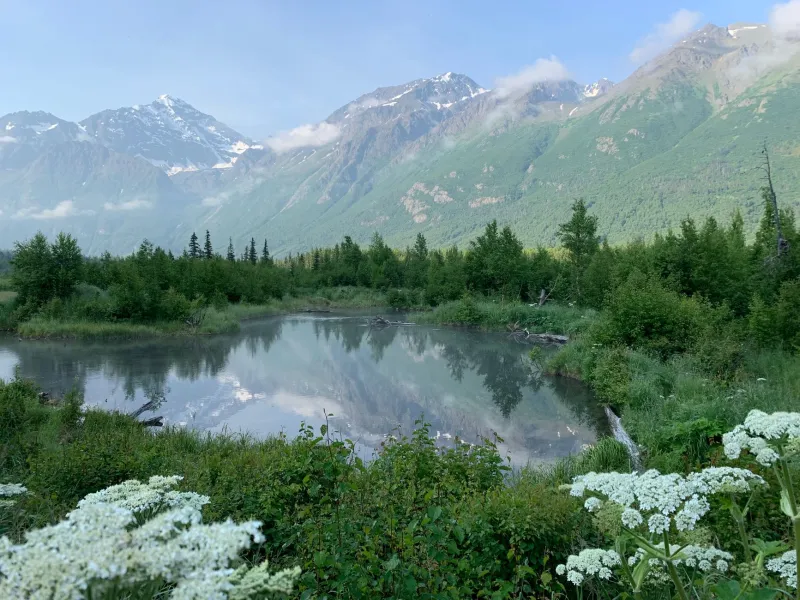
In Fairbanks, the sun does not set at all for stretches around the summer solstice. In Anchorage, usable daylight extends well past 11 p.m. Even in communities further south, the sky retains a luminous quality through the night that bears little resemblance to the darkness most humans evolved to sleep within. For some, this is one of Alaska's most celebrated features. For others — including many of the clients we see at Perspective Practice AK — it is a source of genuine physiological distress.
Understanding why the midnight sun disrupts sleep, and what can be done about it, is not a trivial wellness concern. Sleep quality has direct, measurable consequences for emotional regulation, cognitive performance, immune function, and long-term mental health. Addressing it is clinical work, not simply a matter of personal preference.
The Biology of Light and Sleep
The human circadian system — the internal clock that governs the timing of sleep, wakefulness, hormone release, and dozens of other biological processes — is exquisitely sensitive to light. Specifically, it responds to light detected by specialized photoreceptive cells in the retina that are particularly attuned to blue-spectrum wavelengths. When these cells register light, they send signals to the suprachiasmatic nucleus in the hypothalamus, which in turn suppresses the release of melatonin from the pineal gland.
Melatonin is the hormone most directly associated with sleep onset. Its release is not simply a response to fatigue; it is a timed biological event that, under natural conditions, begins roughly two hours before habitual sleep onset and coincides with the gradual darkening of the environment. When the environment does not darken — as is the case throughout much of an Alaskan summer — that melatonin signal is delayed, attenuated, or in some cases nearly absent.
The result is a circadian system that cannot find its anchor point. Sleep onset becomes difficult. Sleep duration shortens. The restorative slow-wave and REM sleep stages, which depend on sustained periods of melatonin presence, are compressed. Over days and weeks, this produces a cumulative sleep debt that manifests as irritability, difficulty concentrating, emotional dysregulation, and an increased vulnerability to anxiety and depression — conditions that, it bears noting, may already be elevated in a population navigating Alaska's other environmental and social stressors.
Why Some People Struggle More Than Others
Not everyone in Alaska is equally affected by summer light. Individual differences in circadian phenotype — commonly described as whether someone is a "morning person" or an "evening person" — play a meaningful role. People with a naturally delayed circadian phase (those who tend toward later sleep and wake times) are often more vulnerable to summer light disruption, because their already-later melatonin onset is pushed further still by persistent evening brightness.
Psychological factors also contribute. Individuals with anxiety disorders may find that the hyperarousal associated with anxiety combines with light-induced melatonin suppression to create a particularly stubborn form of insomnia. Those with a history of bipolar spectrum conditions should be aware that disrupted circadian rhythms are a well-established trigger for both manic and depressive episodes, and that the sleep changes associated with summer daylight warrant proactive clinical attention.
New residents and seasonal visitors are typically more affected than long-term Alaskans, partly because they have not yet developed the behavioral adaptations — the blackout curtains, the adjusted schedules, the learned cues — that many experienced residents employ as a matter of routine. But adaptation does not happen automatically, and even long-term residents can find their sleep deteriorating in ways they have learned to normalize rather than address.
Practical Strategies for Reclaiming Rest
The good news is that the circadian system, while sensitive, is also trainable. A combination of environmental modification, behavioral consistency, and targeted supplementation can substantially restore sleep quality even during the brightest weeks of the Alaskan summer.
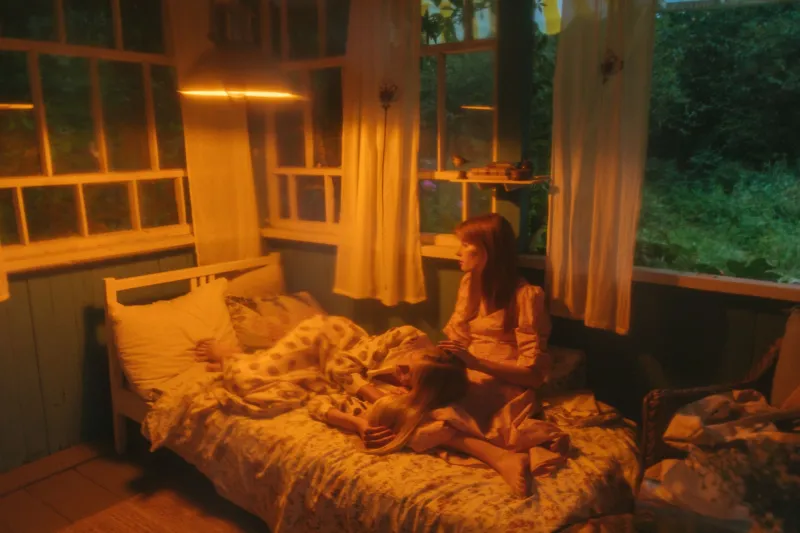
Prioritize light management in the sleep environment. This is the single most impactful intervention available. Blackout curtains or heavy blinds that eliminate ambient light from the bedroom are not a luxury in Alaska — they are a clinical tool. The goal is to create an environment that reliably signals darkness to the circadian system regardless of what is happening outside. Eye masks can serve as a portable alternative for travel or situations where window treatments are not feasible.
Establish and protect consistent sleep and wake times. The circadian system consolidates its rhythms around reliable timing cues. Going to bed and rising at the same time each day — even on weekends, even when the sky is bright at 10 p.m. — provides the internal clock with the anchoring it cannot derive from environmental darkness alone. Irregular schedules compound circadian disruption rather than accommodating it.
Manage evening light exposure deliberately. Reducing exposure to bright light — particularly from screens and overhead lighting — in the two hours before your intended sleep time supports the natural melatonin onset that external conditions are suppressing. Dimming indoor lights and using blue-light filtering settings on devices during this window can meaningfully improve sleep onset latency.
Consider low-dose melatonin supplementation strategically. Melatonin is not a sedative; it is a circadian signal. Taken in low doses (0.5 to 1 mg is often sufficient, and frequently more effective than higher doses) approximately 90 minutes before the intended sleep time, it can help cue the circadian system toward an earlier sleep phase. Individuals with underlying health conditions or those taking medications should consult with a healthcare provider before beginning supplementation.
Use morning light exposure to anchor the circadian anchor point. Exposure to bright natural light shortly after waking — even 10 to 15 minutes outdoors — reinforces the timing signal that tells the circadian system when the active phase of the day begins. In summer, this is abundantly available; the challenge is making it a deliberate practice rather than an incidental one.
Address the psychological dimensions of sleep disruption. When insomnia becomes chronic — defined clinically as difficulty initiating or maintaining sleep at least three nights per week for three or more months — behavioral interventions become particularly important. Cognitive Behavioral Therapy for Insomnia (CBT-I) is currently considered the first-line treatment for chronic insomnia by most major clinical bodies, and its efficacy is well-supported by research. CBT-I addresses the thought patterns and behavioral habits that perpetuate insomnia independent of the original trigger, making it especially valuable for individuals whose summer sleep disruption has evolved into a more entrenched pattern.
Sleep as a Mental Health Foundation
It would be a clinical oversight to treat sleep disruption as a purely physiological inconvenience. Sleep is, in a very real sense, the foundation upon which emotional and psychological health is built. Chronic sleep insufficiency does not merely make people tired; it erodes the neurological resources that support emotional regulation, stress tolerance, and clear thinking. For individuals already managing anxiety, depression, or trauma, disrupted sleep is not a secondary concern — it is often a primary driver of symptom intensity.
At Perspective Practice AK, we frequently find that addressing sleep quality is among the most impactful early interventions we can offer clients, precisely because its downstream effects on mood and cognition are so significant. The midnight sun is one of Alaska's most distinctive features. With the right tools, it does not have to be one of its most costly ones.